Global Battery Minerals Insights
Lithium Processing Shift: Why Refiners Are Replacing Impact Mills with Hydraulic Roller Tech
Published: May 24, 2026 | Category: Global Mining Trends & Technology
With global electric vehicle battery mandates scaling to unprecedented heights this quarter, lithium concentration plants are facing intense pressure to extract every possible percentage of lithium oxide from hard-rock deposits.
Industry intelligence reports suggest that the primary roadblock to higher margins isn’t downstream flotation chemistry—it is the legacy fine-crushing machinery. When high-hardness Spodumene or fragile Lepidolite blocks pass through traditional high-speed kinetic impactors or standard cone configurations, they undergo extreme structural shattering. This severe impact creates excessive micro-fines under 74 microns. In the beneficiation field, this is known as “mineral slime”—a wasteful powder that chokes flotation cells and escapes straight into tailings dams.
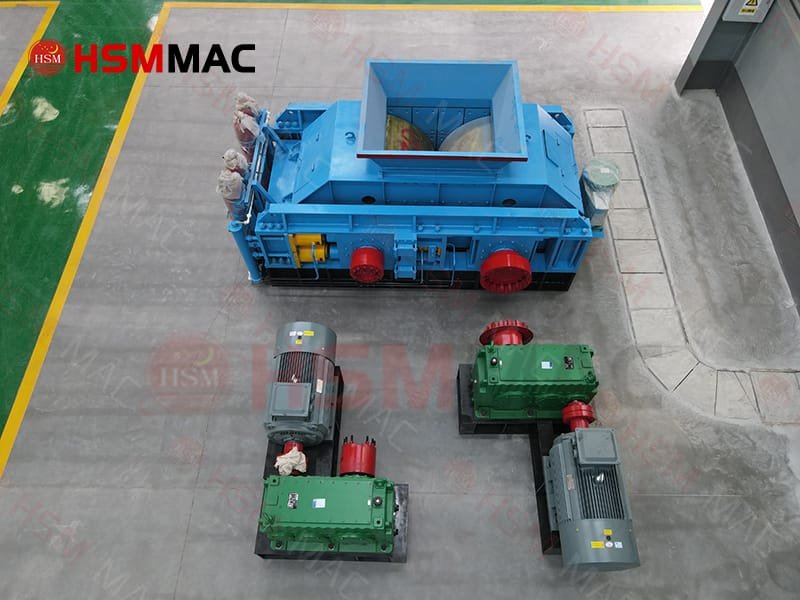
Hydraulic Double Roller Crusher
Securing Flotation Reagent Purity Through Low-RPM Squeezing
To resolve this massive extraction leak, major mineral fields across Western Australia, Africa, and South America are actively replacing legacy impact units with heavy-duty Hydraulic Double Roller Crushers. These systems pass hard lithium minerals through an exact, pressurized hydraulic roller gap at low rotational speeds. This static extrusion shatters the rock cleanly along intergranular crystal interfaces instead of pulverizing them into unrecoverable mud dust.
“Controlling the feed size spectrum before it enters the wet ball mill loop has given our site operators immense control. We have witnessed a 4% absolute spike in our flotation recovery curves simply because we are no longer sending over-pulverized lithium slime into the chemical treatment tanks.”
— Chief Technology Officer, Battery Metal Refining Group
Key Technical Driving Forces Gaining Global Traction:
Low-RPM rolling operations reduce mechanical wear to near-zero. Coupled with customized non-magnetic alloy sleeves, it prevents abrasive tramp iron from mixing into the mineral pulp and disrupting specialized collector agents.
The intense planar hydraulic pressure creates high-density networks of sub-surface micro-cracks inside each cubic grain, shortening subsequent wet ball milling runtimes by up to 25%.
Outfitted with extreme-durability tungsten carbide studded rolls, the equipment processes tough Mohs 6.5–7 spodumene ore matrices smoothly without the rapid parts wear that plagues traditional impact components.
Maximize Your Lithium Concentrate Output
Speak to our lithium beneficiation desk today to calculate the precise roller configurations and hydraulic pressures required for your specific ore geology and yield targets.