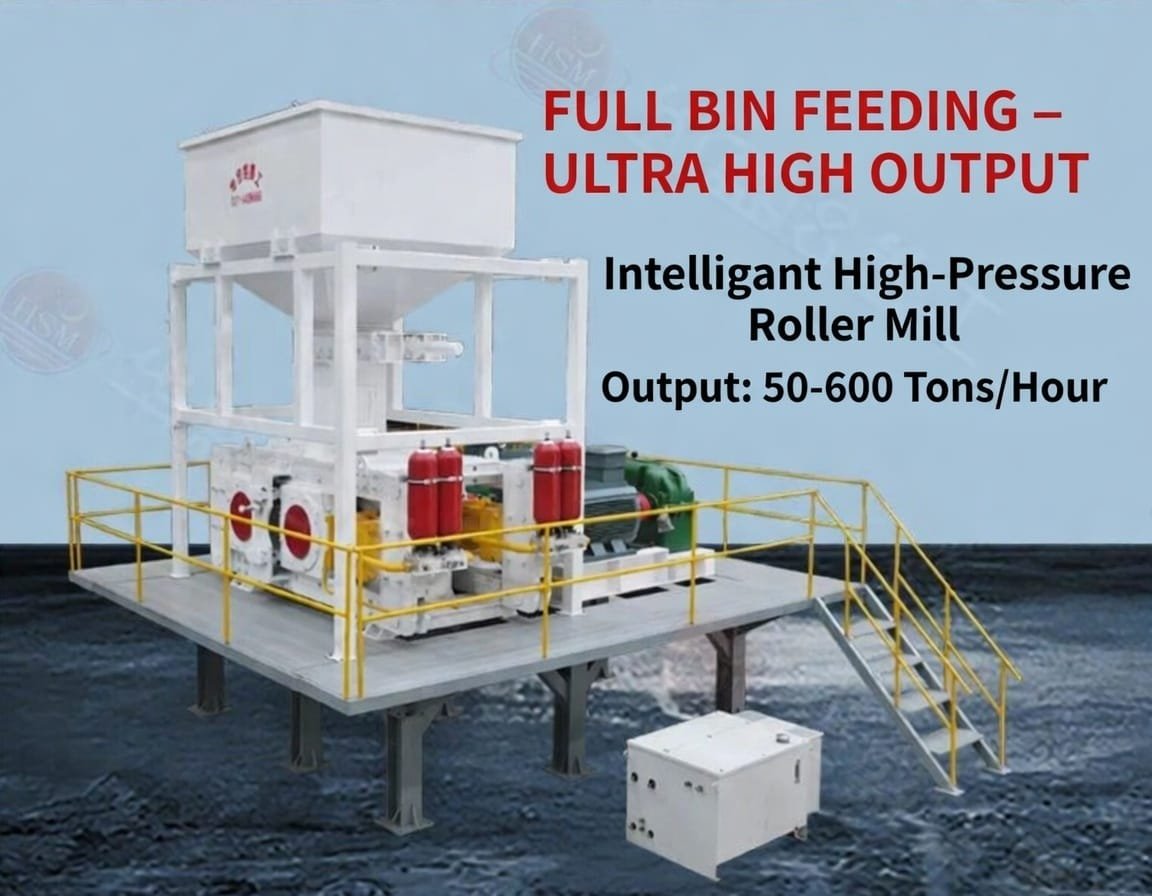
Mining High-Pressure Roll Grinding Equipment (also known as High-Pressure Roll Crusher or High-Pressure Grinding Roll) is a medium-to-fine crushing device widely used in mining, sand and gravel, cement, and other industries. It crushes materials to the required particle size through static pressure compression. It features a simple structure, stable operation, and low maintenance costs. The following is a detailed illustrated explanation of the working principle and structure of mining high-pressure roll grinding equipment.
I. Working Principle
1. Static Pressure Compression Crushing
The core working principle of high-pressure roll grinding equipment is static pressure compression crushing. Material is evenly fed from above between two parallel, high-strength alloy rolls. Under hundreds of tons of pressure exerted by the hydraulic system, the material is slowly compressed and fractured along mineral grain boundaries, ultimately discharging from below as the finished product with the required particle size.
This crushing method differs from traditional hammer crushers or impact crushers, which rely on high-speed impact. High-pressure roll grinders rely on static pressure, resulting in:
Low vibration: No violent impact, ensuring smooth equipment operation.
Even wear: Uniform load distribution, extending the service life of wear parts.
Less over-crushing: Particles are mostly cubic with fewer needle-like or flaky shapes, making them suitable for subsequent beneficiation or sand making.
2. Choke Feed Design
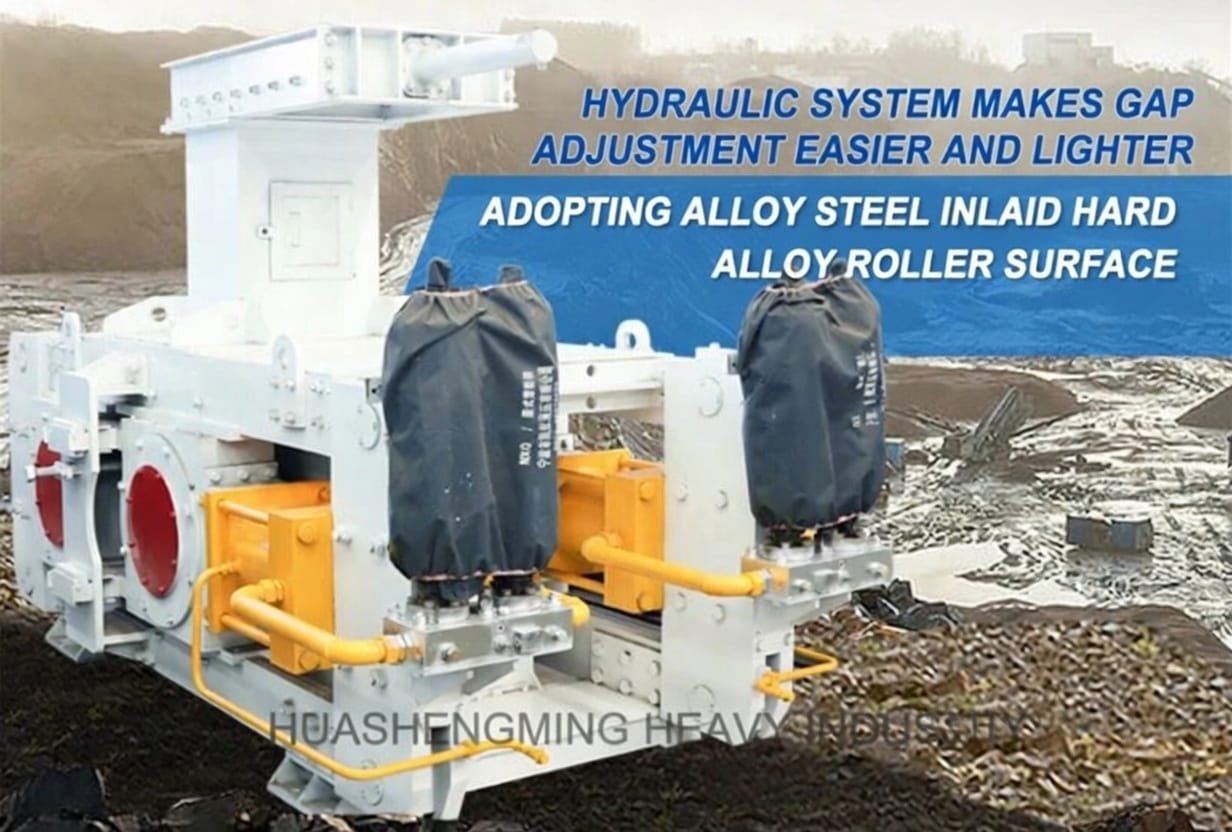
High-pressure roll grinders support choke feeding, meaning material naturally forms a “material bed” between the two rolls. This material bed not only reduces direct impact of material against the metal roll surfaces—protecting the roller shells—but also prevents clogging issues, allowing continuous operation even if the raw material is slightly moist or contains a small amount of clay.
3. Adjustable Discharge Particle Size
By adjusting the gap between the two rolls (the “roll gap”), the discharge particle size can be flexibly controlled. The typical range is between 1–8 mm, meeting different requirements for manufactured sand, ball mill feed, or base material.
II. Structural Breakdown
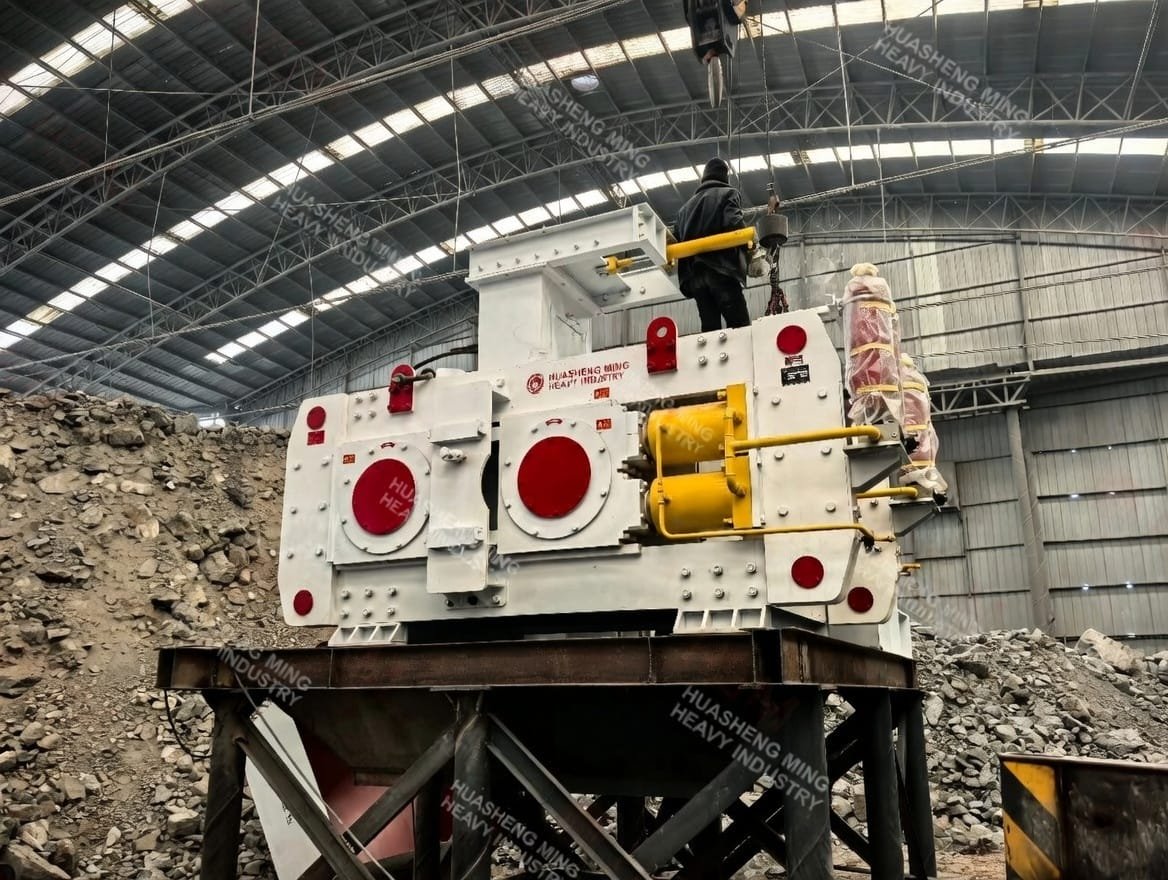
While an actual structural diagram cannot be provided, the following text describes the main components and their functions:
1. Frame
Material: Welded from thick steel plates, ensuring a robust structure.
Function: Supports the entire equipment and withstands loads during high-pressure operation.
2. Rolls
Material: Made of high-strength alloy steel, with surfaces treated using integrally cast high-chromium manganese steel or tungsten carbide studs for enhanced wear resistance.
Diameter and Width: Varies by model, common sizes include Φ1000×600mm, Φ1200×800mm, etc.
Function: The core crushing components that achieve material breakage through compression.
3. Drive System
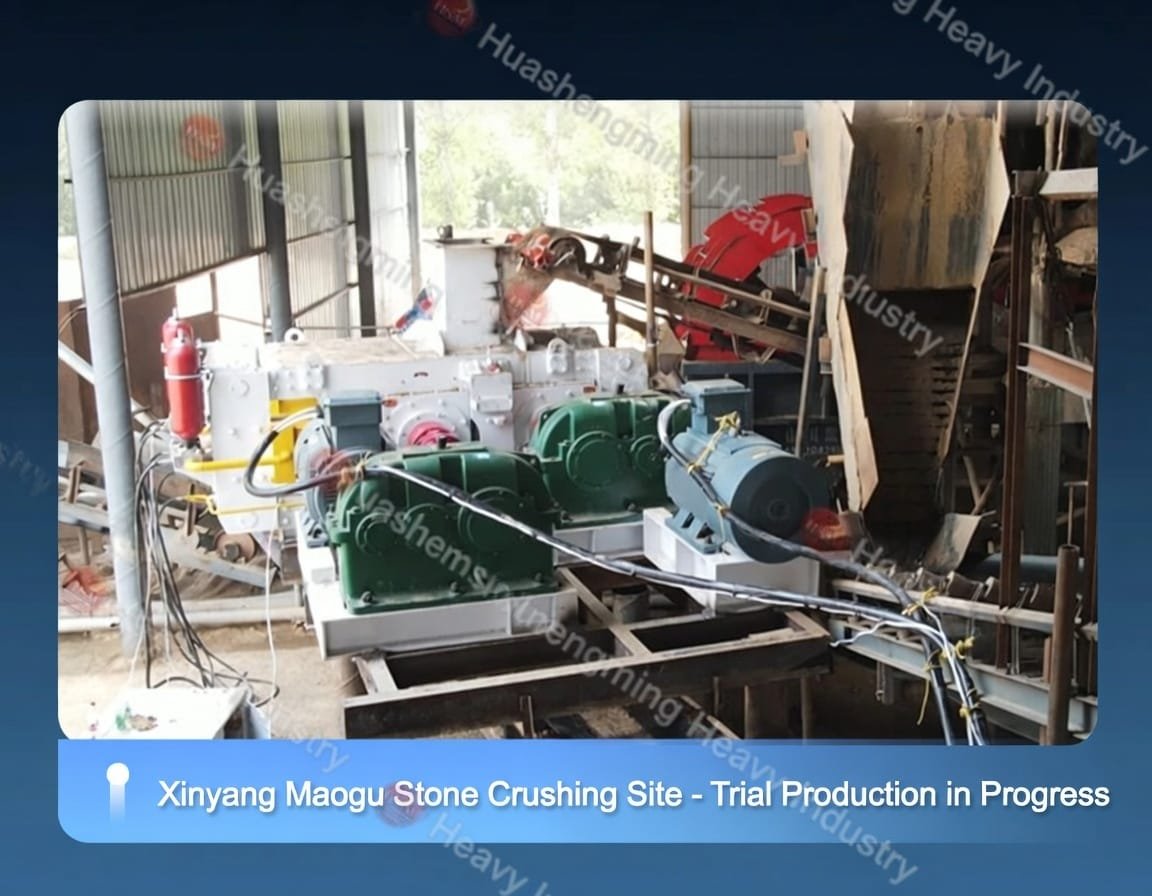
Components: Electric motor, gearbox, coupling, etc.
Function: Drives the rolls to rotate, providing power for crushing.
4. Hydraulic or Spring Pressure Adjustment Device
Function: Adjusts the gap between the two rolls via hydraulic or spring systems to control discharge particle size and automatically releases pressure when hard materials are encountered, protecting the equipment.
5. Lubrication System
Function: Independently sealed design prevents dust from entering bearings, reduces friction, and extends service life.
6. Iron Removal Device
Function: Prevents metal foreign objects from entering the crushing chamber and damaging the roller shells or other critical components.
7. Control System
Components: Control panel, sensors, remote monitoring modules, etc.
Function: Enables equipment start/stop, pressure adjustment, and provides real-time equipment status via remote monitoring.
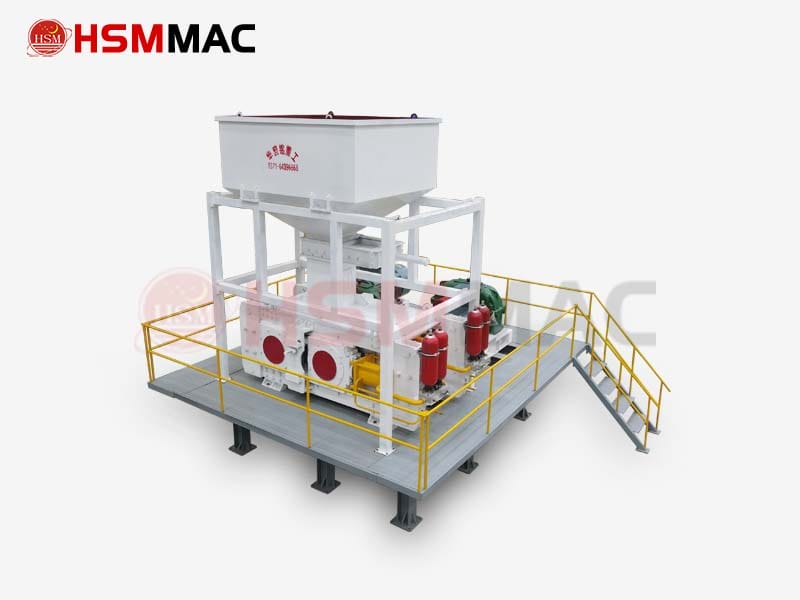
Ore Materials Crusher
III. Advantages Summary
Strong Adaptability: Suitable for various ores, including high-hardness materials such as granite, basalt, and crushed stone.
Good Particle Shape: Particles are mostly cubic with fewer needle-like or flaky shapes, favorable for subsequent beneficiation or sand making.
Easy Maintenance: No high-speed rotor, fewer failure points; ordinary workers can operate after training.
Stable Operation: Supports choke feeding, resistant to clogging, suitable for long-term continuous operation.
Economical and Practical: Lower frequency of wear part replacement compared to traditional crushing equipment, resulting in lower long-term operating costs.
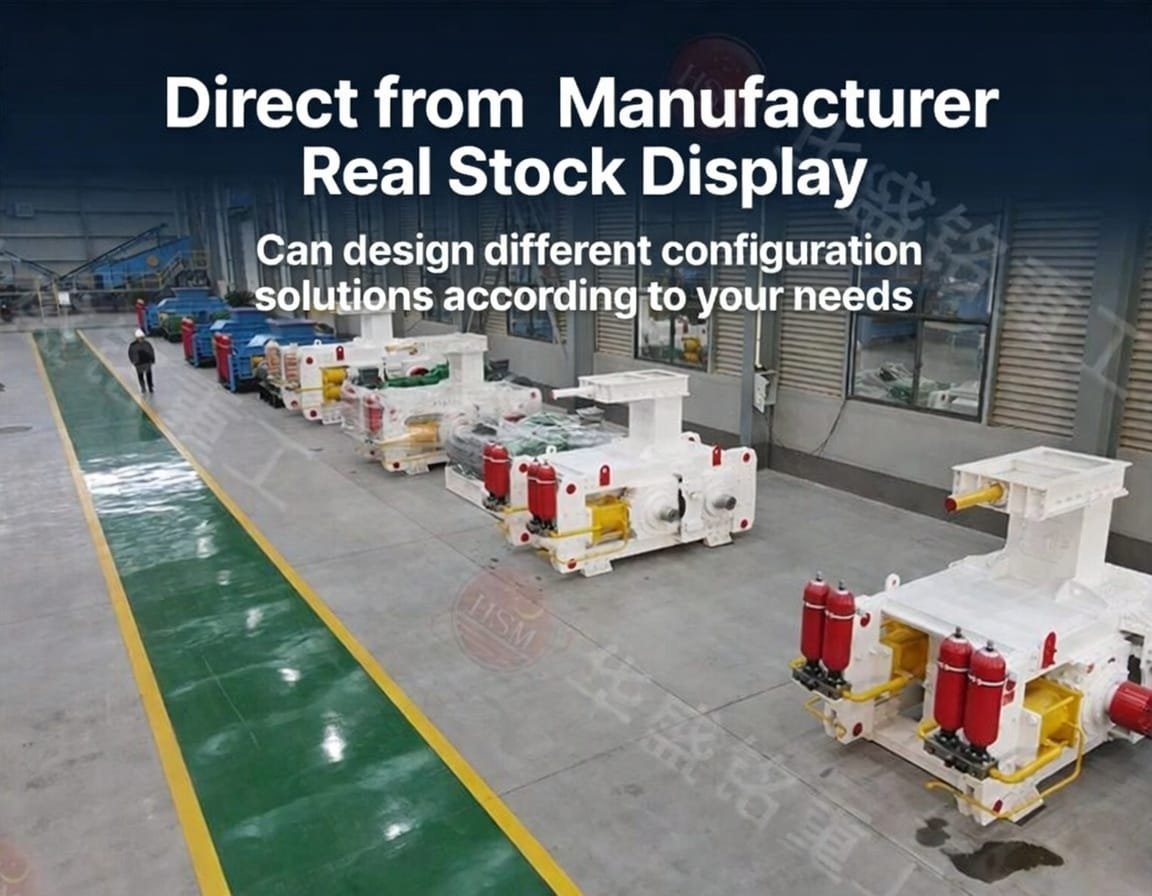
By gaining a thorough understanding of the working principle and structure of mining high-pressure roll grinding equipment, you can better select equipment suitable for your specific operating conditions and fully leverage its performance advantages. We hope this detailed introduction helps you make an informed choice.