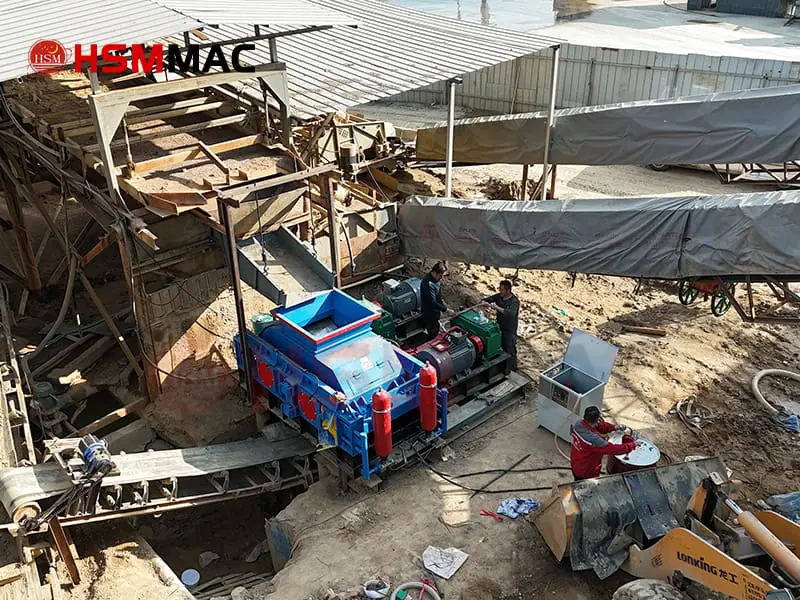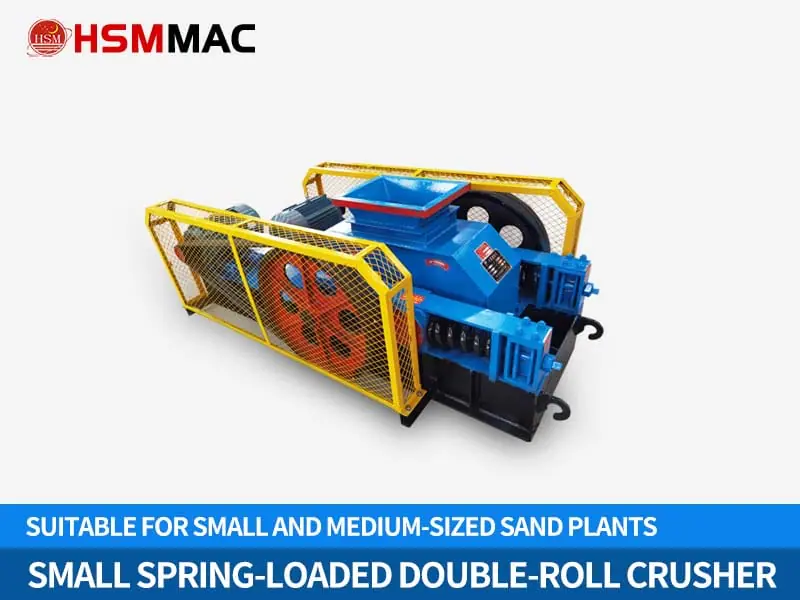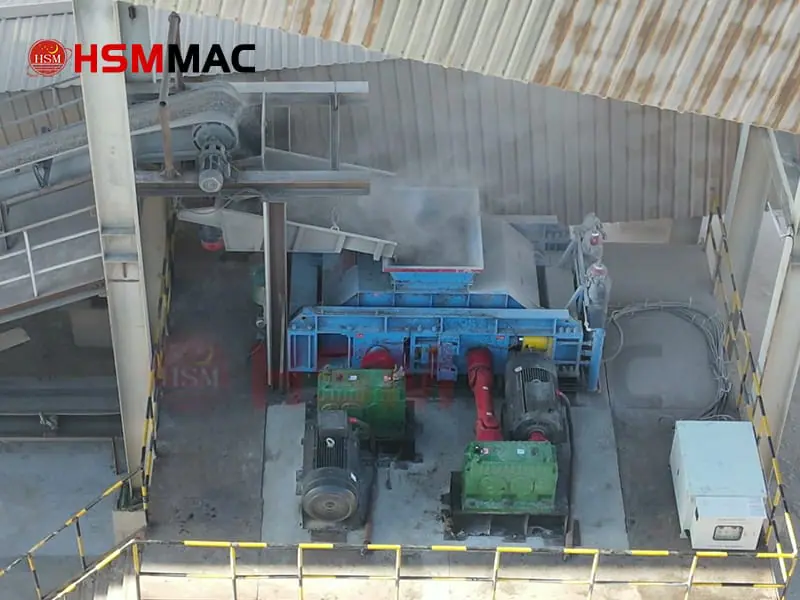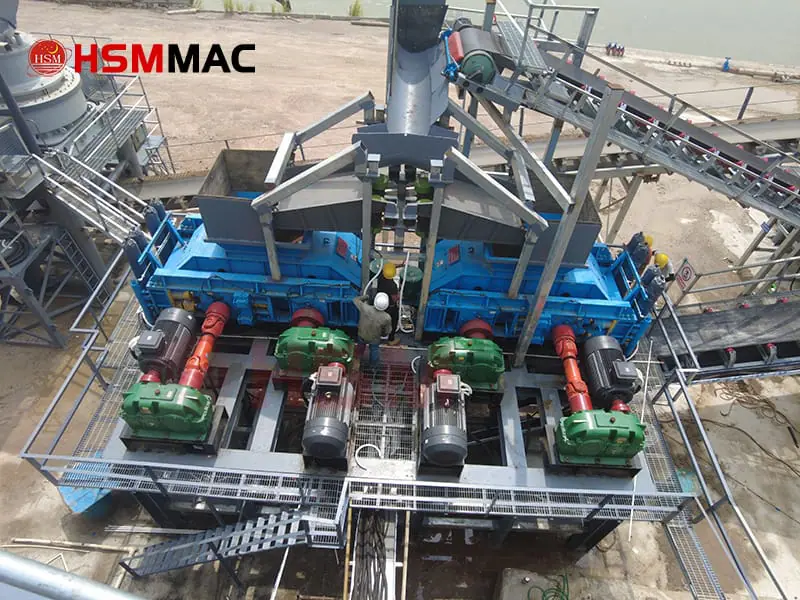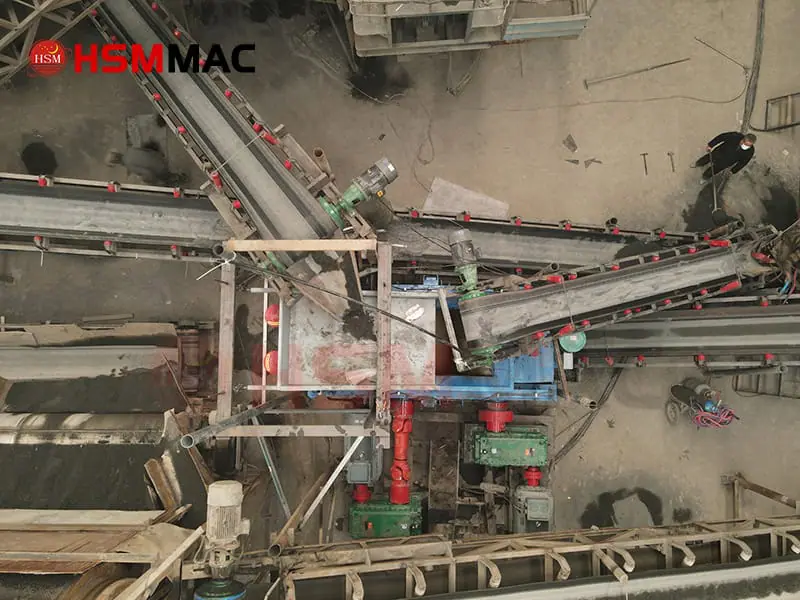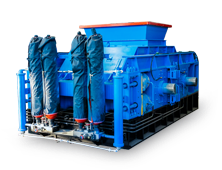
A stone roll crusher—also known as a double roll crusher—reduces raw rock through two counter-rotating rollers applying static compression and mild shearing forces rather than high-speed impact. Engineered by Huashengming (HSM) Heavy Industry, it pairs adjustable roll gap sizing with spring or hydraulic overload protection to deliver uniform discharge particles, minimal fine powder and slime, and reliable operation across sand making and mineral processing plants.
A stone roll crusher, also known as a double roll crusher, relies on two counter-rotating rollers to crush raw stone material. The two rollers rotate toward each other at a set speed, with one roller fixed and the other movable via a spring or hydraulic safety system. Raw stone enters the gap between the twin rollers and fractures along natural cleavage planes under squeezing and mild shearing action [Custom Parameters Available].

Twin Counter-Rotating Rollers and Adjustable Crushing Gap
1. How the Crushing Cycle Operates
- Compression and Shearing Action: As stone feeds into the nip zone between the counter-rotating rolls, compressive force combined with mild shearing splits the rock along natural fracture planes without violent high-velocity hammering.
- Gap-Controlled Sizing and Re-Crushing: The set gap between the two rollers governs final discharge size. Particles smaller than the gap pass through immediately, while larger pieces remain gripped between the rollers until compressed down to target size.
- Spring or Hydraulic Overload Relief: When uncrushable foreign objects (such as tramp metal) or sudden feed surges enter the crushing zone, the movable roller backs off automatically to protect shafts, bearings, and structural frames [Custom Parameters Available].
- Lower Fines and Slime vs. Impact/Cone Crushers: Because stone breaks via controlled compression rather than high-speed impact, the crusher generates far less ultra-fine powder and slime—supporting cleaner manufactured sand and higher mineral recovery in downstream beneficiation.
2. Key Working Principle Summary
- Feeding: Stone enters the crushing zone between twin rollers.
- Squeezing: Opposite rotating rollers compress the material.
- Discharging: Qualified particles pass through the roll gap.
- Protection: Spring or hydraulic relief for tramp iron and overloading.

Hydraulic Relief System and Low-Fines Discharged Stone
Need Precision Compression Crushing for Your Sand or Mineral Line?
Contact Huashengming Heavy Industry today for model matching, roll gap and capacity configuration, sample testing, and reliable global shipping support [Custom Parameters Available]!