Clarifying a common misconception in stone processing: a double roll crusher is a high-efficiency fine-crushing and shaping stage, not a standalone sand-making plant. This article debunks the “one-machine sand plant” marketing myth, outlines the essential multi-stage flowsheet (jaw, cone, roll crusher, screening, and washing), and details when a roll crusher serves as the ideal drop-in upgrade for Huashengming (HSM) Heavy Industry clients.
Direct conclusion: No, it cannot. This represents one of the most critical principles in aggregate plant design. A double roll crusher serves as the fine-crushing and shaping stage of a complete production line—it does not constitute an entire plant on its own. A stable, high-throughput sand-making plant requires preliminary coarse and medium reduction (jaw and cone crushers), closed-circuit screening, and typically sand-washing equipment. Claims in the market suggesting “a single machine makes sand” generally refer only to a single crushing stage, omitting the vital preparatory steps that raw rock demands.

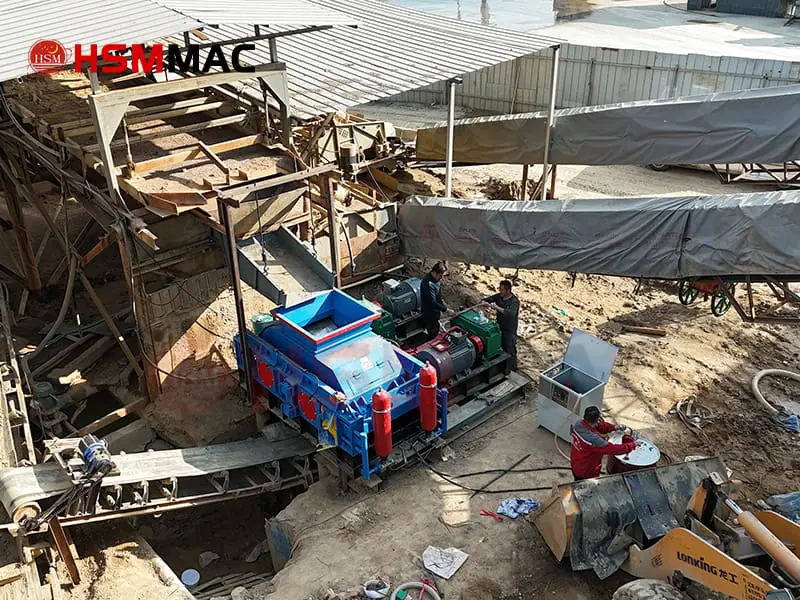
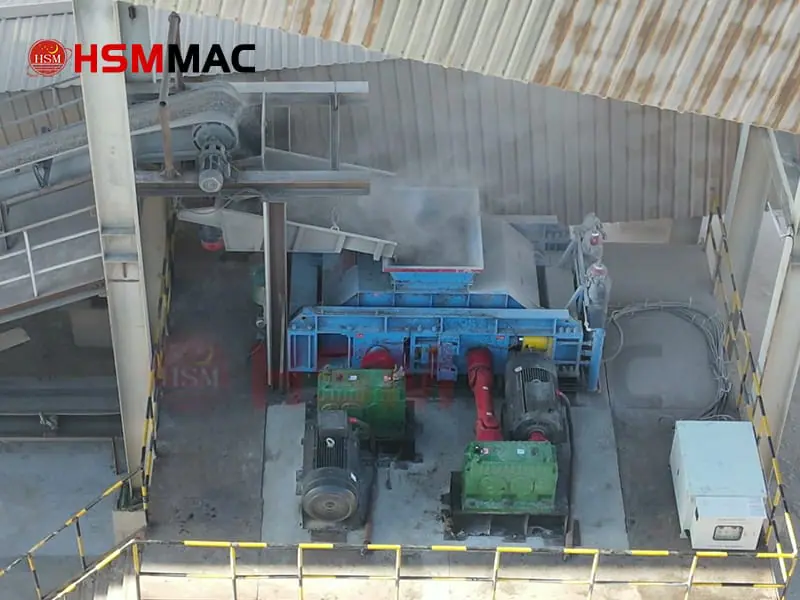
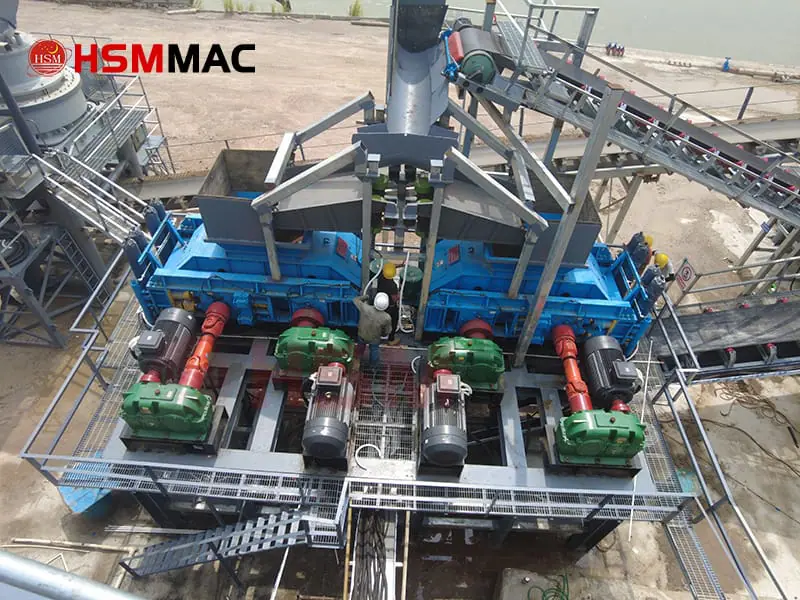
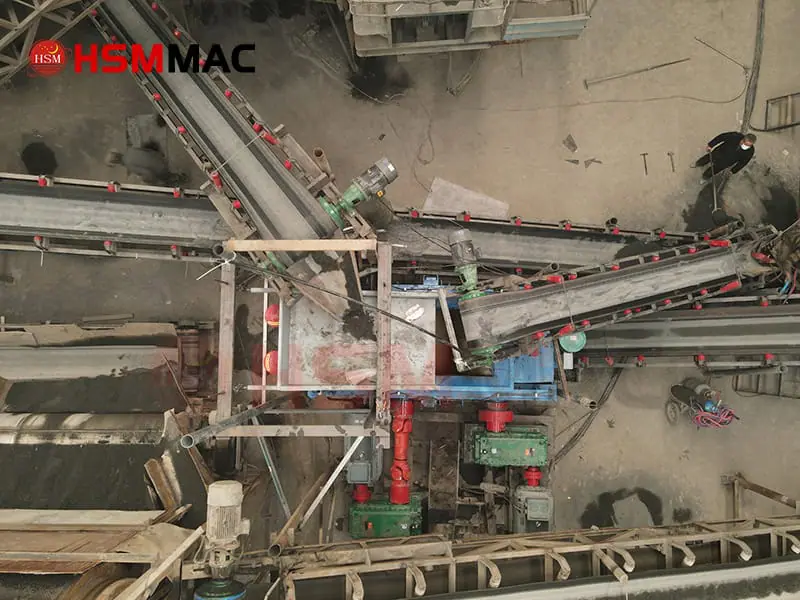
Integrated Multi-Stage Sand Making Plant Layout
1. Why a Roll Crusher Cannot Replace an Entire Plant
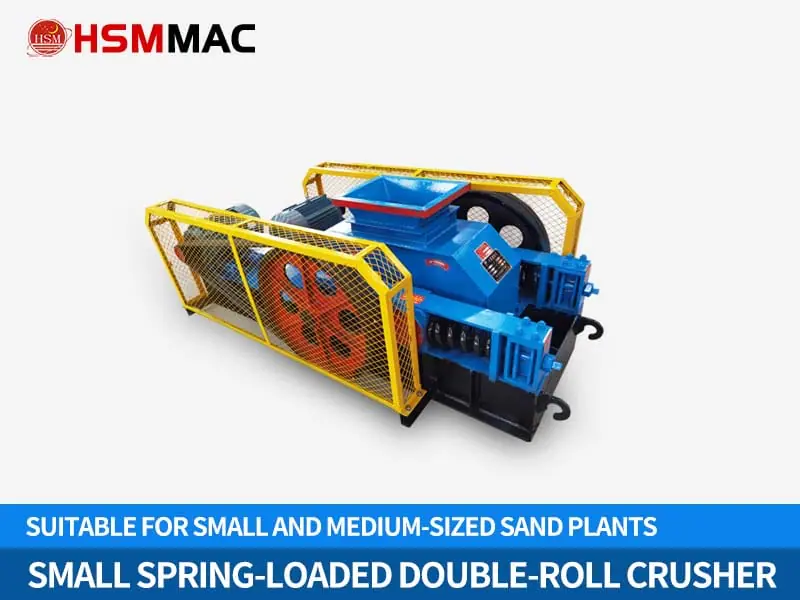
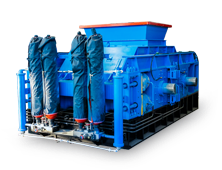
The double roll crusher operates via low-speed counter-rotation compression, governing product top size through precise inter-roll gap clearance. It excels at compressing, shaping, and grading material that has already undergone preliminary size reduction—the definition of tertiary fine crushing. However, it is neither designed nor suited for the following functions:
- Coarse Crushing: Feeding large blasted quarry rocks directly into a roll crusher causes material slippage, violent bouncing, and exponential roller shell wear.
- Medium Reduction: Reducing massive stone down to the roll crusher’s acceptable feed top size ($25text{–}120text{mm}$, depending on model dimensions) requires primary and secondary stages.
- Classification: Crushers contain no internal screening decks; particle sizing requires external vibrating screens to separate qualified sand from oversized return material.
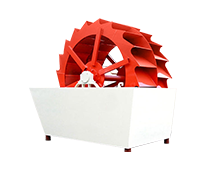
- Desliming & Powder Control: Wet feeds and excess stone dust require sand washing machines or dust collection systems.
Eliminating these essential stages and operating a roll crusher in isolation leads directly to feed rejections, unclassified output, and out-of-spec stone powder content 【Custom Parameters Available】.
2. The Reality Behind “One-Machine” Marketing
Deconstructing the Marketing Myth:
- It typically describes only a single crushing stage while ignoring necessary upstream and downstream auxiliary equipment.
- It assumes raw feed is already small, clean, and easily crushable—conditions rarely met in natural quarries.
- It confuses mechanical rotation with the production of certified commercial sand.
Operators drawn in by oversimplified pitches frequently discover post-commissioning that essential screening and preparation equipment is missing, driving up total capital costs through emergency retrofits.
3. What a Standard Sand-Making Plant Actually Looks Like
Standard Proven Flowsheet:
Vibrating Feeder $rightarrow$ Jaw Crusher (Primary Coarse Reduction) $rightarrow$ Cone Crusher (Secondary Medium Reduction) $rightarrow$ Double Roll Crusher (Tertiary Fine Crushing / Shaping) $rightarrow$ Circular Vibrating Screen $rightarrow$ Sand Washer (Optional) $rightarrow$ Finished Manufactured Sand.
- Jaw & Cone Crushers: Reduce raw quarry blocks down to roll crusher feed limits, safeguarding machine longevity and throughput capacity.
- Double Roll Crusher: Executes final fine-grinding and cubical particle shaping.
- Closed-Circuit Screening: Recirculates oversized particles for re-crushing while enforcing strict grading limits.
- Sand Washing / Dust Control: Regulates clay and stone powder content to meet commercial concrete standards.
4. Under What Conditions Is a Roll Crusher “Enough”?
To remain completely transparent, there are specific operating environments where a double roll crusher forms the vast majority of the installation:
- Upgrading Existing Plants: Facilities featuring pre-existing primary and secondary crushing stages that require a high-performance fine-crushing and shaping module to complete their sand line.
- Small-Scale Pre-Sized Feed Operations: Processing naturally small feedstocks such as river gravel, rounded pebbles, or quarry tailings where primary coarse reduction is unnecessary—though feed regulation and screening remain mandatory upstream.
In short, a roll crusher is “enough” when it integrates into a pre-existing preparatory circuit; it cannot replace the entire preparatory circuit from scratch 【Custom Parameters Available】.
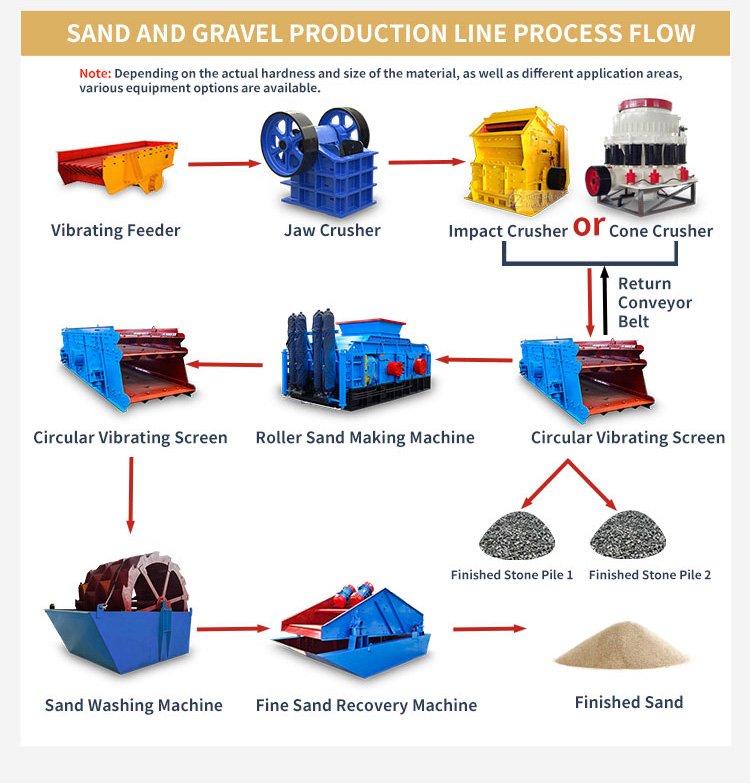
Complete Sand Plant Flowsheet Schematic