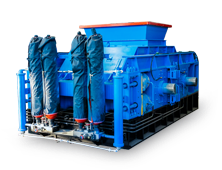
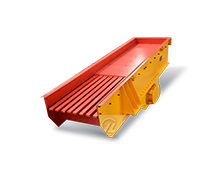
Direct Answer: Upgrading to the new-generation Huashengming (HSM) Roller Sand Maker resolves primary aggregate plant bottlenecks—such as low output, excessive fine powder, high needle-flake content, and high wear costs. Utilizing high-pressure interparticle compression (“more crushing, less grinding”), it delivers superior cubic sand, reduces power consumption, and protects machinery via integrated hydraulic overload systems. Core Performance & Technical Advantages Feature Category Technical Mechanism Operational & Quality Impact Material-Bed Compression High-pressure compression between counter-rotating rollers (“more crushing, less grinding”). Materials break naturally under static pressure. Eliminates wasteful impact energy for smooth, continuous mass production. High Output & Quality Control Millimeter-level gap adjustment for precise discharge control. Produces cubic grains with low needle-flake content and controllable fines. Highly favored by concrete batching plants. Wear Resistance & Savings High-chromium alloy roller shells + low rotational speed. Eliminates frequent hammerhead replacements, lowers power consumption, and cuts long-term electricity costs. Hydraulic Protection Integrated hydraulic-spring overload defense. Rollers automatically retract if metal objects enter the chamber, preventing severe impact damage and reducing downtime. Material Compatibility & Circuit Integration Broad Material Suitability: Effectively processes cobblestone, granite, quartz, limestone, and various other mineral feeds. Complete Circuit Pairing: Seamlessly combines with primary jaw crushers and vibrating screens to construct full-scale…

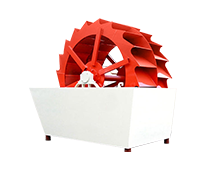
Core Overview: Processing hard, highly abrasive river pebbles into national standard construction sand involves five key stages: Pretreatment → Primary Jaw Crushing → Fine Crushing/Sand Making (Double Roll Crusher) → Screening → Sand Washing[cite: 1]. Using interparticle compression crushing lowers energy consumption and wear while yielding well-rounded 0–5mm manufactured sand. 🔄 Core 5-Stage Process Breakdown Process Stage Primary Equipment Operation & Processing Objective 1. Raw Pretreatment Scalping Screen / De-sander Screens out soil, organic roots, and mud upfront. Pre-sorting prevents severe equipment blockages caused by high pebble hardness and abrasiveness. 2. Coarse Crushing Jaw Crusher Breaks large oversize pebbles down into 50–100 mm medium/small aggregate feeds. 3. Sand Making Double Roll Crusher (HSM Recommended) Uses interparticle compression to reduce size. Produces cubical, rounded 0–5 mm sand with low needle-like particles, low energy usage, and controlled powder. 4. Screening & Recirculation Vibrating Screen Classifies output into finished sand, stone powder, and oversized stone[cite: 1]. Oversized particles return in a closed loop to the double roll crusher. 5. Sand Washing Wheel / Spiral Sand Washer (Optional) Washes away excess stone powder and silt to achieve high-purity, high-cleanliness sand matching concrete aggregate standards. 💡 Process Advantages & Critical Precautions Process Advantages (Double Roll…

Application Overview: Waste fiber gypsum blocks and board offcuts—originating from plasterboard manufacturing and construction recycling—present significant processing challenges due to surface paper layers, strong toughness, and high moisture absorption. HSM Double-Roll Crushers employ low-speed inter-particle bed compression to effectively strip paper fibers from gypsum without clogging or excessive over-grinding. ⚠️ Processing Challenges & The Double-Roll Solution Fiber gypsum materials combine lightweight, high-toughness gypsum with fibrous paper backings. Traditional hammer mills or grate-bottom crushers face severe operational bottlenecks when handling this material: Screen Clogging: High moisture absorption causes damp gypsum dust to blind bottom discharge screens. Fiber Entanglement: High-speed hammers cause tough paper fibers to wrap around internal rotors, leading to frequent shutdowns. Excessive Fines: High-speed dynamic impact pulverizes brittle gypsum into unrecoverable ultra-fine powder. In contrast, the HSM Double-Roll Crusher feeds raw material into the gap between two counter-rotating rollers. Under continuous, uniform static compression, the brittle gypsum cracks away from the flexible surface paper layers. The processed material falls naturally out of the bottom discharge without mechanical impact pulverization. ⚙️ Key Process & Technical Characteristics 📋 Material Capability Limits Maximum Compressive Strength: ≤ 250 MPa Maximum Feed Moisture Content: ≤ 35% Adjustable Discharge Sizing: 0.5 mm to 20 mm…

HSM Hydraulic High-Pressure Roller Mill: The Ultimate High-Efficiency & Energy-Saving Crushing Solution Overview: As the sand-aggregate and mineral-processing industries shift toward high-quality development, crushing technology is undergoing a major evolution. Independently developed by HSM Heavy Industry, the hydraulically-operated high-pressure roller mill delivers on the core principle of “more crushing, less grinding”—slashing energy consumption, boosting efficiency, and cutting long-term operational costs. Core Driving Force: Material-Bed Comminution & Intelligent Hydraulics Adopting the proven material-bed comminution principle, the HSM hydraulic roller mill applies immense pressure across compacted material beds via two counter-rotating rollers. With inter-roller pressure reaching 150–300 MPa, abundant micro-cracks are created inside the feed material, dramatically increasing downstream grinding efficiency. Full-Hydraulic Automatic Adjustment: Dynamically and steadily maintains precise roller gaps based on material hardness and target particle size requirements. Automatic Yielding Protection: When uncrushable foreign objects (e.g., tramp iron) enter the chamber, hydraulic cylinders automatically retract to relieve pressure and protect the main frame from damage, resetting automatically for uninterrupted production. Figure 1: HSM hydraulic high-pressure roller mill in an industrial crushing circuit Superior Build Quality: High-Wear-Resistant Roller Shells To solve the industry pain point of heavy wear-part consumption when processing abrasive materials (granite, basalt, diabase), HSM uses a proprietary alloy…

Background on red clay Nickel Mining in Southeast Asia Southeast Asia is the region with the richest reserves of red clay nickel in the world, primarily concentrated in Indonesia, the Philippines, and New Caledonia. In recent years, with the explosive growth in demand for nickel driven by the new energy vehicle industry,The construction of the red soil nickel ore crushing and hydrometallurgical (HPAL) project has entered a phase of rapid development Solving the Toughest Crushing Challenge in Nickel Processing Southeast Asia’s red clay nickel ore deposits — concentrated in Indonesia, the Philippines, and New Caledonia — have become the global focus of nickel supply for the electric vehicle battery industry. However, the unique characteristics of red clay nickel ore present a formidable challenge to conventional crushing equipment: clay content of 30% to 50%, moisture levels exceeding 25% (even higher during the rainy season), and extreme stickiness that clogs cone crushers and hammer crushers within hours of operation. Field-Proven Results in Harsh Tropical Conditions In a nickel processing facility , Indonesia, our huashengming 2PGY1200×1000 hydraulic roll crusher has been operating continuously through two full rainy seasons, maintaining an availability rate of over 90% — compared to less than 60% for the cone…

In gold mining, the crushing stage is a critical process that determines downstream beneficiation efficiency and gold recovery rates. Gold ore is typically embedded in hard quartz veins and sulfide minerals, requiring large ore blocks to be crushed to suitable particle sizes before entering grinding and separation stages. Hua Sheng Ming roll crusher can process gold ore with compressive strength up to 160MPa and is widely used in fine crushing operations at gold concentrators. In hard rock gold processing, the roll crusher demonstrates clear advantages in fine crushing due to its unique compression crushing method—uniform discharge size, low over-grinding, and stable operation, providing ideal feed size for downstream gravity separation, flotation, or grinding circuits. Why is the Roll Crusher Suitable for Gold Ore Fine Crushing? The core requirement of gold ore crushing is to effectively reduce particle size while controlling over-grinding to prevent gold particle loss in downstream processes. Traditional impact crushers rely on high-speed impact, generating excessive fines that cause fine gold particles to be lost in gravity separation or flotation circuits. The roll crusher operates on the inter-particle compression principle. Two rolls rotate slowly in opposite directions, subjecting material to sustained compressive pressure in the roll gap, causing…

Hua Sheng Ming has been engaged in the research, development, and manufacturing of roll crushers for over 20 years, serving more than a thousand limestone sand-making projects. Throughout our interactions with customers, we have found that regardless of project scale, the core concerns consistently center on three key questions. Below, we address each one in detail. 1. Can a roll crusher meet the quality requirements for limestone sand making? Yes. Limestone has medium hardness, and the roll crusher’s compression crushing principle aligns well with its material characteristics. The finished sand has cubical particle shape, low flakiness content, and continuous grading, meeting the quality requirements of concrete batching plants for manufactured sand. Compared with impact crushers, roll crushers offer different characteristics in fines control, allowing selection based on finished product requirements. In a roll crusher, material passes through a single compression cycle and is discharged immediately, avoiding repeated grinding and effectively controlling fines generation, resulting in higher yield. When processing limestone feed under 30mm, the output can be controlled to under 3mm, making it suitable for high-quality manufactured sand production. 2. How wear-resistant are the roll shells? The roll shell is the core wear part of a roll crusher, and its…


In gold ore fine crushing, over-grinding is the hidden killer of recovery—fine particles easily slip away in downstream separation.Huashengming roll crusher changes the game by replacing impact force with inter-particle compression, delivering sharper size control and longer wear life. From “Impact Breaking” to “Compressive Crushing” The Huashengming roll crusher operates on the inter-particle crushing principle—two rollers rotating in opposite directions apply sustained compressive force to the ore, causing it to fracture along particle-to-particle contact points rather than through single-particle impact shattering. This delivers two key benefits: Tighter particle size distribution: At the same discharge setting, the roll crusher produces significantly less over-fine material compared to impact-type crushers, with narrower size fluctuation; Better mineral liberation: Compressive stress propagates along mineral grain boundaries, promoting separation of gold minerals from gangue along natural interfaces, rather than fracturing gold particles together with the gangue—a meaningful advantage for downstream leaching or gravity concentration. Wear Resistance & Maintenance: Roll Shell Life Depends on Material and Application Fit Gold ore often contains high levels of hard minerals such as quartz, placing severe demands on roll shell wear resistance. The roll shell is manufactured using Huashengming’s proprietary formulation and process, delivering high working-layer hardness and abrasion resistance while maintaining…

Basalt sand making machine are crucial for producing high-quality sand for concrete production. Concrete is the backbone of many construction projects, and using the right materials ensures durability and strength. The basalt sand making machine efficiently processes raw basalt into fine, uniform sand that meets the needs of the concrete industry. Importance of Sand in Concrete Production Sand is one of the primary ingredients in concrete, along with cement and water. The quality and texture of the sand significantly impact the final product’s strength and durability. Basalt, being a strong and stable material, is an ideal choice for producing sand used in concrete. The basalt sand making machine ensures that the sand has the perfect particle size, making it suitable for concrete mixtures. Boosting Production Efficiency Using a basalt sand making machines helps boost production efficiency. The machine quickly transforms raw basalt into sand, saving both time and labor. This efficiency ensures that construction projects stay on schedule and within budget. With high output, companies can meet the growing demand for concrete without compromising on quality. Consistent Sand Quality for Strong Concrete Consistency is key when it comes to sand used in concrete. A basalt crusher provides uniform sand that…

In thermal power generation and circulating fluidized bed boiler operations, coal feed particle size control directly affects combustion efficiency and boiler safety. Oversized particles cause poor fluidization and incomplete combustion; excessive fines increase fly ash carbon content and waste coal. Traditional hammer crushers processing power plant coal commonly suffer from wet coal clogging, high fines generation, and uneven particle size — failing to meet high-standard coal-fired production requirements. For power plant coal feed crushing, Huashengming double-tooth roll crusher uses low-speed, high-torque shearing and splitting principles, making it the preferred equipment for retrofits in thermal power plants, self-provided power plants, and coking facilities. I. Power Plant Coal Feed Crushing – Pain Points of Traditional Equipment Power plant raw coal has complex composition, mixed with clay and gangue, with unstable moisture content. Traditional impact-type equipment is inherently unsuitable for coal processing: Severe over-crushing. High-speed impact generates excessive ultrafine coal powder that cannot be effectively burned, wasting coal, increasing fly ash carbon content, and adding load to dust collection systems. Wet coal causes frequent clogging. Screen-equipped crushers face severe screen blinding and chamber sticking with wet and agglomerated coal during rainy seasons, requiring manual cleaning and disrupting coal handling continuity. Uneven output particle size. Mixed particle…

Here are the types of roller crusher, commonly used in mining, building materials, and chemical industries, which are primarily designed for crushing materials of medium hardness: 2. Double-Roller Crusher A double-roller crusher consists of two counter-rotating rollers. The material is crushed by being squeezed and sheared between the rollers. This type is suitable for soft and medium-hard minerals like limestone, clay, iron ore, and coal. The advantages include high throughput, uniform product size, a sturdy design, and low maintenance costs. 3. Triple and Quadruple-Roller Crusher Triple and quadruple-roller crushers have additional rollers to achieve finer material crushing. These crushers are typically used for applications requiring high precision and fine granularity. For example, in a triple-roller crusher, primary crushing is done by the upper single roller, followed by secondary crushing by the lower double rollers. This design allows for larger feed sizes and higher throughput. 4. Toothed-Roller Crusher A toothed-roller crusher has rollers with specially designed tooth patterns on their surface, making it highly effective for handling wet, sticky, and soil-mixed materials. This design prevents the equipment from clogging while maintaining efficient crushing performance, even when dealing with difficult-to-crush materials. Choosing the right types of roller crusher is crucial for achieving…

A Quad Roll Crusher is a high-efficiency crushing machine that uses four rollers to process materials. It is commonly applied to medium-hard and soft materials such as coal, limestone, and ores. With excellent crushing performance and precise output control, Quad Roll Crushers are ideal for various industrial applications. How Does a Quad Roll Crusher Work? A Quad Roll Crusher features two pairs of rollers, categorized into primary and secondary rollers. Primary Crushing: Materials are initially fed into the first pair of rollers for coarse crushing. Large chunks are broken down into smaller sizes during this stage. Secondary Crushing: The crushed materials then pass through the second pair of rollers, achieving the desired particle size. This two-stage crushing design ensures uniform particle size and minimizes over-crushing. Key Advantages High Efficiency: The two-stage crushing system handles large volumes of materials effectively. Precise Control: Adjustable roller gaps and speeds allow easy control of output particle size. Low Maintenance Costs: A simple structure and durable wear parts result in reduced maintenance expenses. Versatility: Suitable for processing coal, ores, limestone, and other materials. Eco-Friendly: Designed to minimize dust and noise, meeting modern environmental standards. Applications of Quad Roll Crushers Quad Roll Crushers are widely used…
+86-13838144666
+86-13838144666