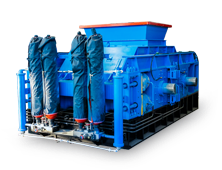
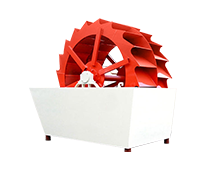
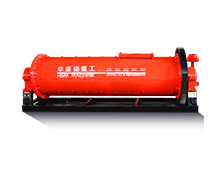
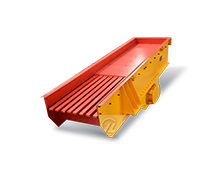
If you’re in the market for efficient and reliable crushing equipment, the roller crusher for sandstone is a machine you should consider. Designed to crush sandstone and other hard materials into fine aggregates, this crusher is essential for various industries, including construction, mining, and road building. In this article, we’ll delve into the features and advantages of the roller crusher for sandstone and explain why Huashengming Heavy Machinery Factory is your best choice for purchasing and servicing this equipment. Why Choose a Roller Crusher for Sandstone? A roller crusher is designed to handle tough materials like sandstone, providing several key benefits: High Crushing Efficiency: The roller crusher is capable of crushing hard sandstone into uniform, fine aggregates, making it ideal for producing high-quality sand and gravel. Durability and Reliability: Constructed from high-grade materials, the roller crusher is built to withstand heavy use and deliver consistent performance over time. Low Maintenance: With a simple structure and few wear parts, the roller crusher requires minimal maintenance, reducing downtime and operational costs. Versatile Applications: In addition to sandstone, the roller crusher can crush various other materials, including limestone, coal, and more, making it a versatile tool for multiple industries. Huashengming Heavy Machinery Factory:…


In traditional processes, aluminum sulfate solution forms blocky or flaky crystals after cooling and crystallization. These are often manually broken before secondary processing – a method that is labor-intensive, inefficient, and produces inconsistent particle sizes. As the industry demands increasingly uniform finished products, a more efficient and reliable crushing solution is urgently needed. Huashengming roll crusher – the ideal choice for aluminum sulfate crystal crushing Huashengming has developed a roll crusher specifically for aluminum sulfate crystal blocks, which have moderate hardness, break easily, but require uniform particle sizing. The equipment uses two counter-rotating rollers to compress and shear the material, achieving one-step crushing. By precisely adjusting the roll gap, the output particle size can be flexibly controlled to meet process requirements, ensuring consistent finished particles. Core advantages: Wear and corrosion resistance for extended service life Aluminum sulfate crystals are somewhat corrosive, placing high demands on wear parts. Huashengming roll crushers feature roller surfaces hardfaced with cemented carbide, providing combined wear resistance, heat resistance, and corrosion resistance. This significantly extends the service life of the crushing rolls, reducing maintenance costs and downtime for customers. Overload protection for safe and reliable operation The equipment is equipped with spring or hydraulic overload protection….

150-300TPH double roller crusher by Huashengming heavy industry crushes materials under 250MP strength.Roller sand making machine is another breakthrough in the field of sand and gravel aggregate production equipment manufacturing. Roller sand making machine is also called double roll crusher. Roller sand making machine uses two motors to drive two pairs of rollers to squeeze and grind the materials. The crushing degree of the roller is less than 80mm, and the finished product particle size requires 50 mesh-20mm fine crushing. In the past, brick factory owners struggled to find suitable crushers due to size and output issues. Now, industrial technology has improved. Huashengming Heavy Industry produces double roller crushers with outputs from 2 to 400 tons. They offer over 20 models for fine crushing operations. Feed particle size is less than 80mm, and finished product size ranges from 50 mesh to 20mm. Suitable for medium and fine crushing of medium hardness materials. Ideal for limestone, slag, coke, and coal. Used in cement, chemical, electric power, metallurgy, and building materials sectors. Features of 150-300TPH double roller crusher 150-300TPH double roller crusher uses two independently driven rollers. These generate squeezing and shearing forces to crush materials. Materials fall between rollers through the…

Sulfur concentrate is an important industrial raw material for producing sulfuric acid and extracting sulfur, with strong demand in chemical, metallurgical and other industries. When recovering sulfur concentrate from coal gangue or pyrite ore, the crushing stage is the key to recovery rate. If the material is crushed too fine, a large amount of pyrite is lost and tailings grades become high. If it is not crushed enough, liberation is insufficient and the concentrate grade remains low. The HSM sulfur concentrate crusher is specifically designed to solve this problem. With low over‑grinding, uniform discharge size, and high reliability, it helps processing plants protect the “critical line” of sulfur concentrate recovery. I. Three Major Pain Points in Sulfur Concentrate Crushing In sulfur concentrate production lines, traditional crushing equipment commonly faces three types of problems: Over‑grinding causes tailings loss. Pyrite is brittle. Traditional hammer crushers use high‑speed impact, breaking the ore into excessive fines. These fine particles, being too light, cannot settle effectively in jigs or flotation cells and are directly lost with tailings water, significantly reducing recovery. Wet and sticky materials cause clogging. Coal gangue from various sources often has high moisture and clay content. Material sticks to crushing chamber walls and screen…

Industrial-Grade Crushing Performance HSM Series Large Hydraulic Double Roller Crusher Static Pressure Extrusion | Intelligent Hydraulic Overload Safety | 30% Energy Efficiency Gain Capacity: Up to 400 t/h | Feed Size: ≤ 120 mm Heavy-Duty Industrial Crushing Redefined Engineered for high-volume industrial environments, the HSM series utilizes precision static pressure extrusion to reduce ore and minerals with maximum efficiency. By integrating advanced electro-hydraulic controls, this system ensures ultra-stable, continuous operation, serving as the core crushing solution for cement, mining, and large-scale waste recycling plants. Why HSM Hydraulic Crushers Lead the Field Smart Hydraulic Protection The automated hydraulic sensing unit identifies tramp iron or unbreakable obstructions instantly, retracting rollers to bypass threats and resetting automatically to maintain zero-downtime production. High-Efficiency Energy Saving Advanced extrusion mechanics cut energy consumption by up to 30% while increasing total throughput by 40% compared to traditional kinetic impact crushing. Laminar Flow for Premium Output Uniform pressure distribution across the roller gap ensures consistent cubic particle shapes, minimizing needle-flake content to meet strict global infrastructure standards. Extended Wear Life Constructed with proprietary high-chromium manganese alloy, HSM roller skins are engineered for superior wear resistance, delivering long service life even in demanding applications. Technical Data Model Roll (D×W)…

Industrial Crushing Systems High-Efficiency Four-Roll Crushing Solution Two-Stage Integrated Fine Crushing | Screen-less Design | Moisture-Resistant Technology Engineered for high-capacity industrial environments, our Four-Roll Crusher streamlines medium and fine crushing into a single, high-performance unit. By utilizing advanced two-stage roller geometry, this machine processes materials with compressive strengths up to 300MPa. Its screen-less, anti-clogging configuration makes it an industry-leading choice for processing wet and viscous materials, such as coal gangue, without the need for complex return loops. Operational Advantages • Optimized Workflow: Two-stage crushing (coarse primary, fine secondary) replaces traditional two-machine setups, reducing plant footprint and labor costs. • High Moisture Adaptability: The screen-less design prevents material buildup, effectively handling feed moisture up to 30%. • Intelligent Safety: Features automatic hydraulic/spring retraction to bypass uncrushables, ensuring zero downtime. • Precision Customization: Roll surfaces available in toothed, surfacing, or flat options to match specific material hardness and particle size goals. Technical Specifications Model Feed (mm) Capacity (t/h) Power (KW) 4PG0404PT < 20 2 – 30 15 4PG0605PT < 40 5 – 60 22 (30) 4PG1080PT < 60 20 – 180 45 (55) 4PG1210PT < 80 30 – 220 90 (75) Streamline Your Crushing Circuit Our engineers are ready to design a…

Global Mining & Milling Digest The Shift to Static Comminution: Why HPGR is Redefining Global Ore Beneficiation Efficiency Published: May 28, 2026 | Topic: Advanced Mining Automation & ROI Optimization As major global mining conglomerates face tighter operational margins and rising energy costs, large-scale concentrators—from iron ore to molybdenum—are urgently pivoting toward infrastructure retrofits that replace legacy, energy-intensive secondary crushing circuits. At the forefront of this industrial transformation is the widespread deployment of High Pressure Grinding Rolls (HPGR). Unlike traditional crushers that depend on high-velocity, wear-heavy dynamic collisions, HPGR units utilize a robust solid-roller framework integrated with precision centrifugal casting liners. By forcing raw feed material under immense hydraulic pressure, the system achieves efficient inter-particle comminution, fracturing rocks along their natural mineral grain boundaries with minimal energy dissipation. Surging Liner Lifespans: A 90% Utilization Benchmark Field reports from state-of-the-art iron ore beneficiation lines underscore the durability of modern HPGR technology. While legacy hammer mills often demand frequent, costly downtime for liner replacements, advanced HPGR centrifugal castings maintain operational excellence even as the remaining liner thickness approaches 1cm. This breakthrough surges the total roller liner utilization rate to 90%, effectively stripping away massive labor costs and inventory overheads from plant balance…

Global Battery Minerals Insights Lithium Processing Shift: Why Refiners Are Replacing Impact Mills with Hydraulic Roller Tech Published: May 24, 2026 | Category: Global Mining Trends & Technology With global electric vehicle battery mandates scaling to unprecedented heights this quarter, lithium concentration plants are facing intense pressure to extract every possible percentage of lithium oxide from hard-rock deposits. Industry intelligence reports suggest that the primary roadblock to higher margins isn’t downstream flotation chemistry—it is the legacy fine-crushing machinery. When high-hardness Spodumene or fragile Lepidolite blocks pass through traditional high-speed kinetic impactors or standard cone configurations, they undergo extreme structural shattering. This severe impact creates excessive micro-fines under 74 microns. In the beneficiation field, this is known as “mineral slime”—a wasteful powder that chokes flotation cells and escapes straight into tailings dams. Securing Flotation Reagent Purity Through Low-RPM Squeezing To resolve this massive extraction leak, major mineral fields across Western Australia, Africa, and South America are actively replacing legacy impact units with heavy-duty Hydraulic Double Roller Crushers. These systems pass hard lithium minerals through an exact, pressurized hydraulic roller gap at low rotational speeds. This static extrusion shatters the rock cleanly along intergranular crystal interfaces instead of pulverizing them into unrecoverable…

Daily Industrial Digest May 2026 Briefing Global Comminution Trend: High-Pressure Extrusion Replaces Impact Grinding in High-Purity Mineral Sectors How modern hydraulic roll tech is simultaneously resolving iron contamination and slime waste in silicate processing lines. Industry Focus The Critical Shift Toward Low-RPM Inter-Particle Compression As advanced ceramics, precision glass matrices, and ultra-pure chemical aggregates hit unprecedented global demand, processing plants face a shared structural bottleneck: mechanical wear-induced iron contamination. Traditional high-speed impact mills, while common, subject high-purity minerals like Potassium Feldspar and Quartz to violent friction, shedding micro metal powders that fundamentally degrade the final whiteness grading and product purity of the batch. Recent field telemetry proves that transitioning to advanced hydraulic double roller circuits mitigates this risk entirely. Operating via parallel static pressure loops at optimized lower speeds, these heavy installations fracture abrasive formations directly along natural crystal geological boundaries rather than shredding them. The operational outcome is dual-faceted: a premium cubic aggregate configuration with minimal micro-fines, and an iron contamination rate dropped to near undetectable metrics. Market Bulletins & Technical Highlights Ball Mill Capacity Elevated by 30-40%By pre-conditioning downstream mill feeds via adjustable hydraulic roll gaps (calibrated down to 2mm – 10mm), operators register significantly reduced ultimate grinding…

Global Mining News Decarbonizing Comminution: HPGR Technology Accelerates Sustainable Ore Sizing Published: May 20, 2026 | Industry Insights & Technology Trends International Mining Review — With global mining operations managing sharper declines in head grades and highly variable rock matrixes, bulk material processing facilities are actively implementing cleaner structural solutions. Market analytics from recent industrial equipment assessments confirm that optimizing power consumption within the milling block has grown into the primary driver for commercial feasibility. “Conventional high-speed hammer mechanisms and primary jaw crushers frequently underperform under the stringent environmental thresholds and thin operating margins mandated by modern green plants. Consequently, High Pressure Grinding Roll (HPGR) engineering has shifted from an alternative setup to the industry benchmark.” Overcoming the Abrasive Ore Challenge Field assessments underscore that contemporary roll-press installations prove highly efficient when targeting stubborn, highly abrasive minerals such as Copper, Gold, Iron, and Molybdenum deposits. Relying on an advanced inter-particle bed compression theory, material is broken down under extreme hydraulic static force rather than high-velocity impact bars. This method curtails overall circuit energy costs by 30% to 45% while introducing widespread micro-fractures into the discharge aggregates, significantly lowering the resistance index for secondary ball mills. Operational Achievements: Capping Extraneous Waste…

Industry Guide How to Choose the Right Industrial Coal Crusher Machine A Technical Guide to Eliminating Clogging and Controlling Fines Generation Key Technical Challenges in Coal Handling Plants Whether your processing line deals with raw bituminous coal, hard anthracite, or high-moisture coking coal, selecting the wrong crushing machinery can severely damage your bottom line. Mineral plants face three persistent bottlenecks: **excessive fine dust generation (over-crushing)**, **screen blinding or chamber clogging** caused by sticky wet coal, and **costly downtime** in continuous power generation setups. To overcome these operating limits, a growing number of modern preparation facilities are replacing outdated hammer mills with high-capacity **Hydraulic Double Roller Crushers**. Double Roller Coal Crusher: Compression-Based Particle Sizing The core efficiency of this system relies on the **synchronized compression-extrusion mechanism**. Instead of utilizing violent impact forces that violently shatter the fuel matrix into unwanted, unsellable slack dust, two heavy-duty rollers counter-rotate at optimized speeds, drawing the mineral feed downward and applying a calculated, steady squeeze. Value for Thermal Power & Coal Chemical Operations: By cleaving the coal aggregates directly along their natural internal shear planes, the machine guarantees high dimensional accuracy. The result is a highly predictable, cubic product distribution with negligible fines, creating the…

Industry Insight May 18, 2026 How to Lower River Pebble Sand Making Machine Running Cost and Boost Plant ROI With the global demand for high-performance concrete aggregates climbing steadily, sand plant managers are prioritizing **operational profit margins** over raw volume. When dealing with highly abrasive river pebbles, the single biggest threat to your balance sheet is the non-stop replacement cycle of high-wear components. Why VSI Crushers Cause High Wear Costs on Hard Pebble For years, traditional plants relied on Vertical Shaft Impact (VSI) crushers for fine sizing. While VSIs offer decent shaping capabilities, their high-speed impact logic backfires when hitting river stones with a Mohs hardness above 7. The intense friction shreds rotor tips rapidly. Site data confirms that some VSI-based sand lines waste **over 40% of their daily budget** just on wear parts. The Solution: Shifting from Impact to Static Compression HSM Hydraulic Double Roller Crushers solve this issue by utilizing **high-pressure static extrusion** instead of high-speed collision. By minimizing the linear sliding speed between the mineral and the alloy surface, this mechanical design extends the service life of high-chromium roller skins by up to 300%. Optimizing the Fineness Modulus of Finished Sand Modern concrete specifications require absolute control…
+86-13838144666
+86-13838144666