Gypsum is a soft mineral (Mohs 2), making size reduction mechanically easy—yet chemically sensitive. High-speed impact crushers risk frictional thermal buildup that triggers premature dehydration of dihydrate (CaSO4 · 2H2O) into hemihydrate before controlled calcination. Huashengming (HSM) Heavy Industry’s double roll crushers utilize low-speed compression comminution to crush gypsum gently without heat input, preserving chemical integrity, minimizing dust fines, and delivering superior wear economics.
Gypsum is soft—the core engineering challenge is not rock hardness. Gypsum (CaSO4 · 2H2O) is one of the softest industrial minerals in crushing (Mohs hardness 2). Roller shells barely experience physical abrasion; wear parts are rarely the primary operational concern.
The true operational challenge is thermal management. Gypsum’s commercial value is strictly tied to its chemical hydration state: heating the mineral past approximately 150 °C causes it to partially dehydrate into hemihydrate (CaSO4 · 1/2H2O / plaster of Paris)—a transformation that a downstream calcination plant is designed to execute under precise, controlled conditions. If size reduction introduces sufficient frictional heat to trigger early thermal reaction, the calciner receives an inconsistent mixture of dihydrate and hemihydrate that disrupts downstream process quality.
Note: Capacity and sizing parameters are indicative reference values; final machine selection is confirmed against your specific gypsum purity, moisture level, and downstream processing specifications [Custom Parameters Available].

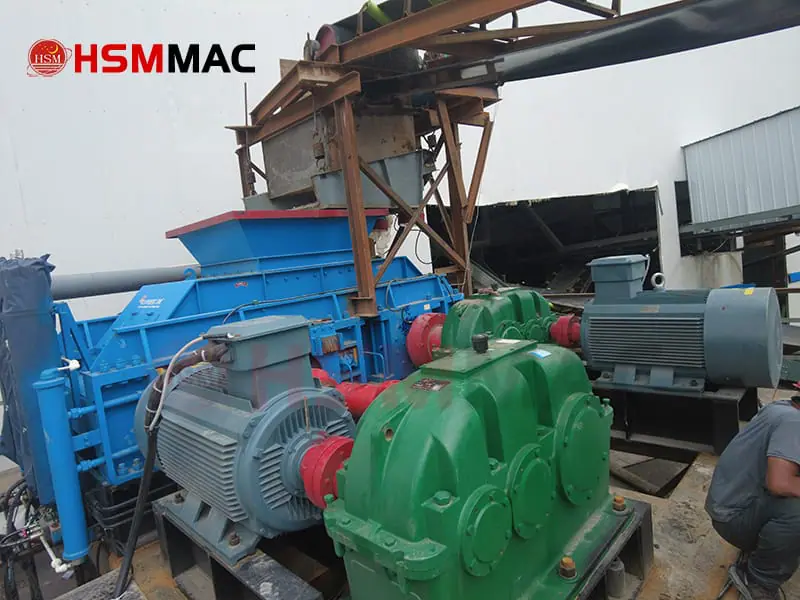
Heavy-Duty HSM Double Roll Crusher Operating in a Gypsum Processing Plant
1. Why Low-Speed Compression Suits Gypsum
- Minimal Heat Input (Preserving Hydration): A double roll crusher operates at low peripheral speeds and crushes purely via counter-rotating compression rather than high-velocity kinetic impacts. Without localized friction heating the ore, crushing remains purely mechanical—leaving chemical calcination strictly to thermal equipment.
- Controlled Sizing & Low Fines: Inter-roll gap settings govern product top sizes directly; material crushes to target sizing and exits immediately (“crush-to-size-and-exit”). Hammer mills tend to over-grind soft gypsum into fine powders, causing energy waste, dust control burdens, and mill handling bottlenecks.
- Exceptional Wear Part Longevity: Soft gypsum creates minimal abrasive wear on steel roller shells. Operational shell lifespans in gypsum lines are among the longest of any industrial mineral, eliminating high-frequency consumable costs and preserving slim operating margins.
- Tolerance for Damp Feed: As-mined gypsum frequently carries natural moisture. Double roll crushers handle damp, sticky clay-bearing feed cleanly without internal screen deck blinding. (For extremely wet or plastic clay feeds, specialized toothed roll shells provide positive gripping).
- Streamlined Plant Layout: In many gypsum processing lines, a single double roll crusher serves as the sole size-reduction step ahead of grinding mills or calciners—reducing capital costs, footprint requirements, and transfer dust emissions.
2. Where It Sits in the Gypsum Flowsheet
Common Operational Applications:
- Plasterboard / Wallboard Stucco Lines: Mine to Double Roll Crusher to Grinding Mill to Calciner (Kettle / Flash Calciner) to Wallboard Manufacturing Line.
- Cement Retarder Addition: Crushed gypsum is interground with cement clinker; the roll crusher feeds the cement circuit with clean, consistently sized rock.
- Agricultural Soil Conditioner: Provides sized granular gypsum where low dust content and clean fracture faces enhance product quality.
Target output sizing ahead of calcination or grinding is a process engineering choice; Huashengming configures roll gaps to match your exact downstream thermal equipment requirements [Custom Parameters Available].
3. Roll Crusher vs. Hammer Mill for Gypsum
| Evaluation Factor | Double Roll Crusher | Hammer Mill |
|---|---|---|
| Heat Input & Friction | Minimal (low-speed compression) | High (repeated high-velocity impact) |
| Premature Dehydration Risk | Low (preserves dihydrate state) | Higher (localized thermal spikes) |
| Fines & Over-Grinding | Controlled, low dust generation | Tends to pulverize into excess powder |
| Wear Parts Consumption | Roll shells (extremely long service life) | Hammers & grate bars (moderate wear) |
| Damp / Sticky Feed Handling | Tolerant (toothed options for sticky clay) | Prone to caking and screen blinding |

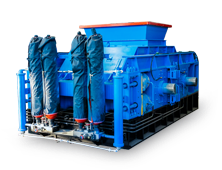
Structure of a Double-Roll Crusher
4. Four Parameters Required for Inquiry
To receive a precise engineering proposal and quotation for gypsum crushing, please provide:
- Gypsum Feed Type & Moisture: (Run-of-mine lump size, moisture percentage, clay content)
- Maximum Feed Top Size: (Lump dimensions entering the crusher)
- Target Product Top Size: (Grinding mill or calciner feed specification)
- Design Capacity: (Required throughput in tons per hour)
Providing these four metrics allows Huashengming to specify exact equipment models, motor power ratings, and specialized roll shell geometries tailored to your gypsum plant [Custom Parameters Available].
Referenced process descriptions serve as engineering guidelines; specific performance parameters are governed by official project customization agreements.