A double roll crusher cannot—and should not—replace a grinding mill (whether a ball mill, Raymond mill, or vertical roller mill). Crushing and pulverizing represent two completely distinct operational stages in industrial flowsheets: one reduces coarse rock to millimeter-scale sizing through low-energy compression, while the other grinds material down to micron-scale powder using high-energy impact and attrition. This article explores the physical boundaries of comminution, the synergistic “crush more, grind less” relationship, and technical integration guidelines for Huashengming (HSM) Heavy Industry clients.
Direct conclusion: No, it cannot, nor should it. A double roll crusher and a grinding mill (whether ball mills, Raymond mills, or vertical mills) perform two completely different operational jobs within a processing plant—one focuses on “crushing,” while the other focuses on “grinding.” Claiming that a double roll crusher can replace a grinding mill is equivalent to saying a food chopper can replace a precision grinder; it fundamentally confuses two separate processing stages.
The correct engineering perspective is that a double roll crusher pre-crushes material down to a stable, fine top size, enabling the downstream grinding mill to operate with maximum efficiency. It handles low-cost crushing so that expensive grinding mills do less heavy lifting. Ultimate product fineness, however, remains governed entirely by the grinding mill [Custom Parameters Available].

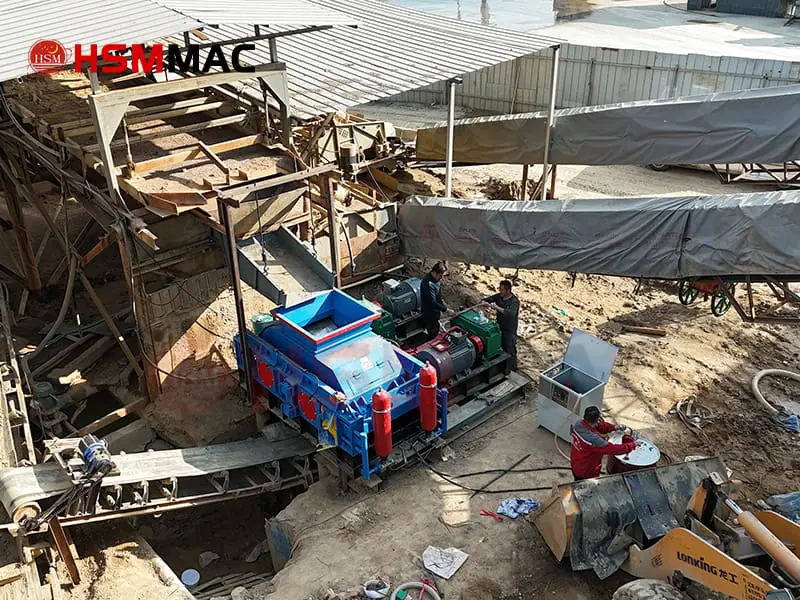
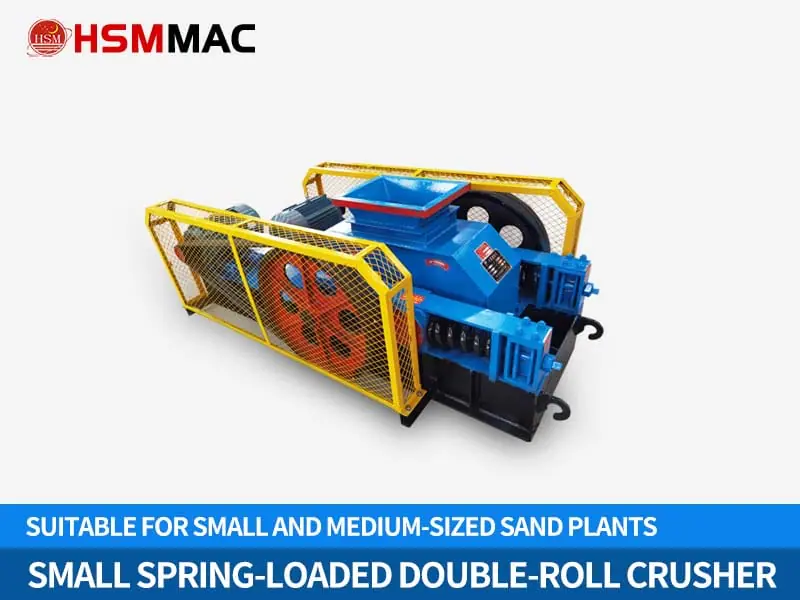
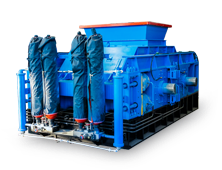
HSM Hydraulic Double-Roll Crusher
1. Crushing and Grinding Are Two Distinct Stages
- Crushing (Double Roll Crushers): Utilizes mechanical compression and shear forces to reduce large raw rocks down to millimeter-scale sizing. Energy consumption is low, mechanical equipment is structurally streamlined, and the process is engineered specifically for bulk size reduction (“taking large blocks down to small lumps”).
- Grinding (Ball Mills, Raymond Mills, Vertical Mills): Relies on cascading steel media, roller-ring attrition, or impact to pulverize millimeter-scale particles down to tens of microns. Electrical energy draw is exceptionally high, making grinding the single most capital- and power-intensive stage in the plant.
A strict physical boundary separates these operations: crushers cannot achieve micron-scale fineness, and mills should never be burdened with coarse reduction. Forcing a grinding mill to crush large rocks means utilizing the most expensive equipment on site for the cheapest mechanical work, resulting in excessive electrical power and media consumption.
2. The Synergistic Relationship: Front-End Support
Double roll crushers and grinding mills work in tandem rather than competing against each other. The standard industrial layout follows a sequential progression:
Standard Proven Flowsheet:
Primary Coarse Reduction to Secondary Reduction to Double Roll Crusher (Fine Crushing) to Grinding Mill (Pulverizing) to Finished Product.
Three Major Benefits of Pre-Crushing:
- Reduced Mill Workload: Lowering feed top size entering the grinding mill immediately enhances overall mill throughput capacity and energy efficiency.
- Stabilized Mill Feed: Roller gap locking establishes a consistent feed top size with minimal fluctuation, keeping the grinding mill operating within its optimal efficiency zone.
- Extended Media Lifespan: Avoiding coarse chunks inside the grinding mill significantly reduces consumption rates of steel balls, rollers, and internal liners.
This operational philosophy embodies the core industrial maxim: Any reduction achievable through low-cost crushing should never be left for expensive grinding media to conquer [Custom Parameters Available].
3. Deconstructing Common Misconceptions
- Misconception 1: Confusing Millimeter Sizing with Micron Powder. Because double roll crushers produce fine manufactured sand and granular particles, some operators assume they generate ultrafine powder directly. In reality, roll crusher output remains millimeter-scale; achieving micron-scale powder requires the shear and attrition forces of a ball mill, Raymond mill, or vertical roller mill.
- Misconception 2: Trying to Eliminate Mill Capital Investment. While grinding mills represent significant capital expenditure and space requirements, they remain the exclusive industrial stage capable of achieving target fineness in conventional flowsheets. Omitting the grinding mill does not save money—it results in finished products that fail to meet commercial specifications.
4. Operational Boundaries and Technical Scope
- Not a Universal Fine Crusher: Double roll crushers require strict feed top size controls ($25text{–}120text{mm}$ depending on model scale); primary jaw and secondary cone crushers must handle massive boulders upstream.
- Ultrafine Specs Belong to Mills: Applications requiring ultimate cement fineness or mineral grinding down to $-200$ mesh remain strictly within the domain of grinding mills.
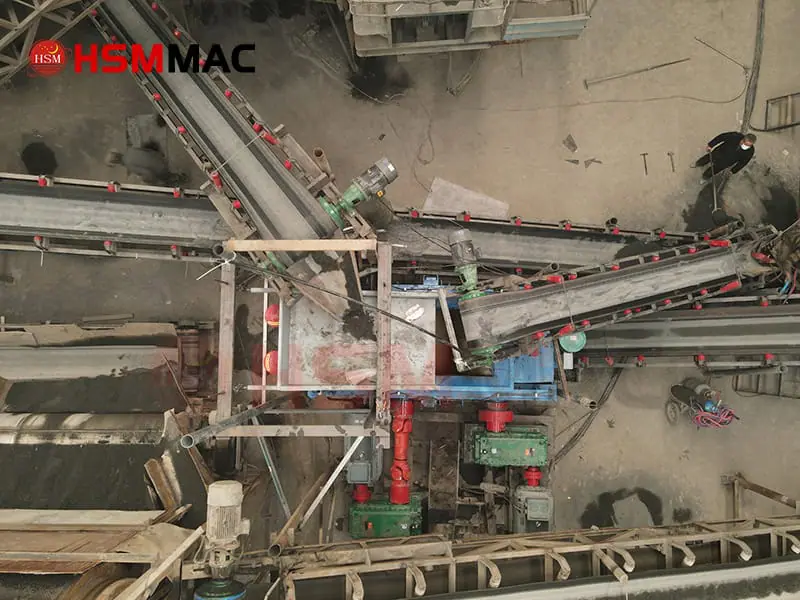
- Mill-Front Retrofits: Adding a double roll crusher ahead of existing grinding mills functions as a high-efficiency technical upgrade rather than a plant rebuild, boosting circuit output without altering main mill infrastructure.

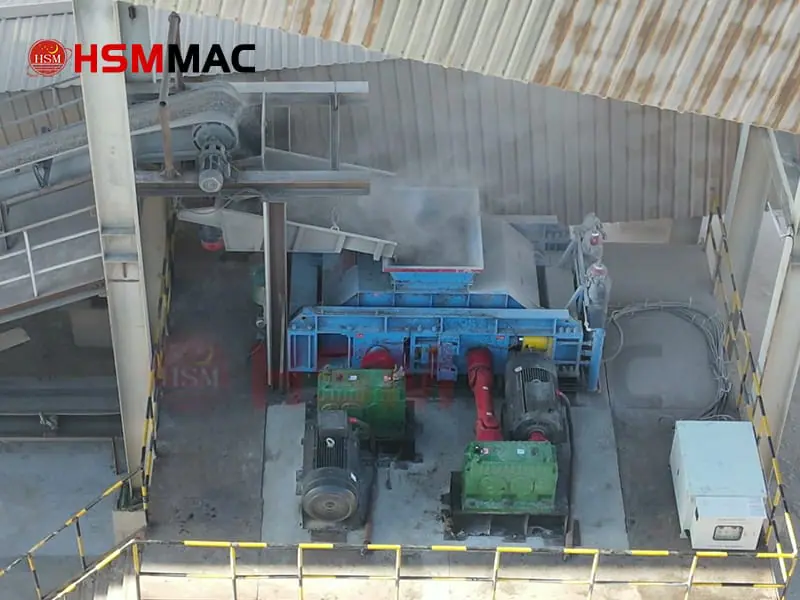
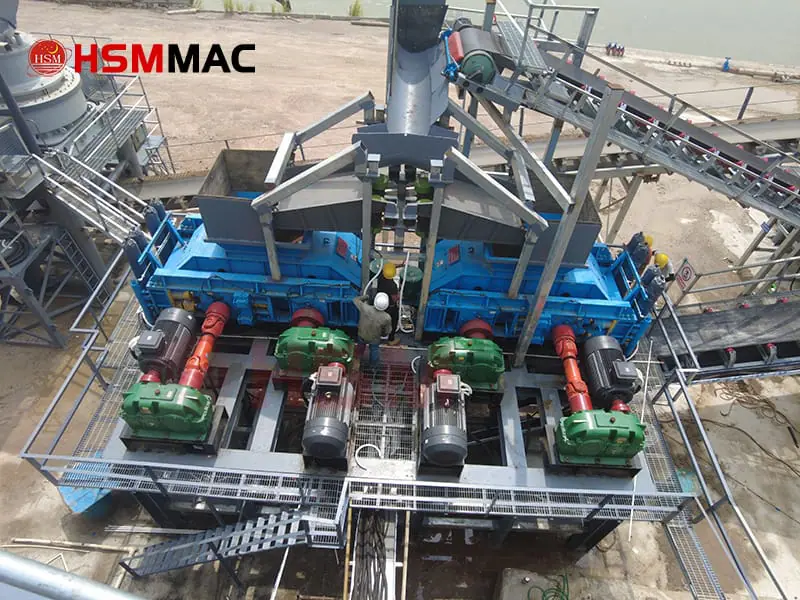
Double Roll Crusher Feeding a Grinding Mill Circuit