Both mineral roll crushers and cone crushers are staple size-reduction machines in mineral processing, but they serve fundamentally different mechanical roles. Selecting the optimal equipment requires evaluating ore characteristics, downstream beneficiation workflows, capacity targets, and slime sensitivity. This comprehensive comparison helps Huashengming (HSM) Heavy Industry clients determine whether a cone crusher, mineral roll crusher, or a combined multi-stage circuit best fits their operational goals.
Both mineral roll crushers and cone crushers are widely deployed across mineral processing plants. The right choice depends heavily on ore characteristics, your downstream beneficiation process, capacity requirements, and your operational tolerance for ultra-fine slimes. In many high-efficiency modern mining operations, plants deploy them in a combined circuit rather than choosing one exclusively [Custom Parameters Available].
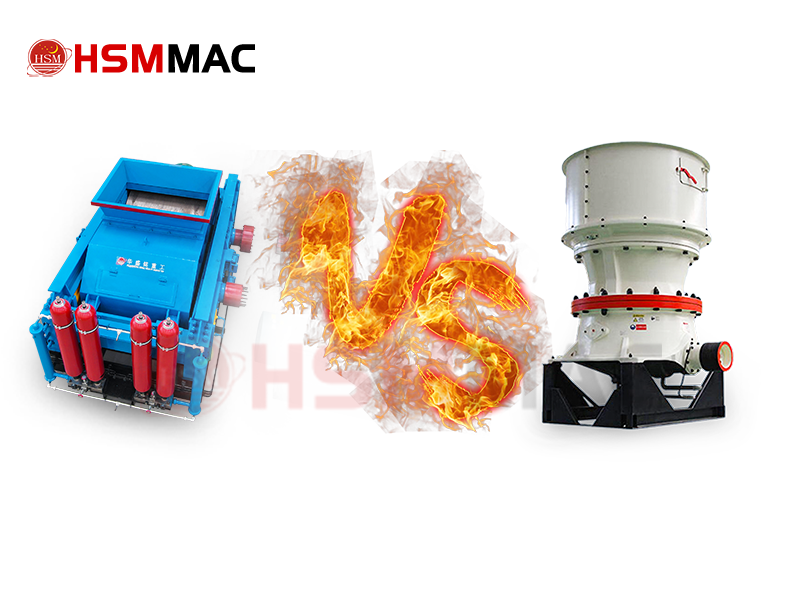
Side-by-Side Comparison of HSM Mineral Roll Crusher and Cone Crusher
1. Working Principle Comparison
Understanding how each machine applies mechanical force explains its distinct output characteristics:
- Cone Crusher: Fractures ore through continuous gyratory squeezing action between a mantle and concave liner. It achieves large reduction ratios and massive hourly capacities, but naturally generates higher volumes of ultra-fine slimes and flaky particles.
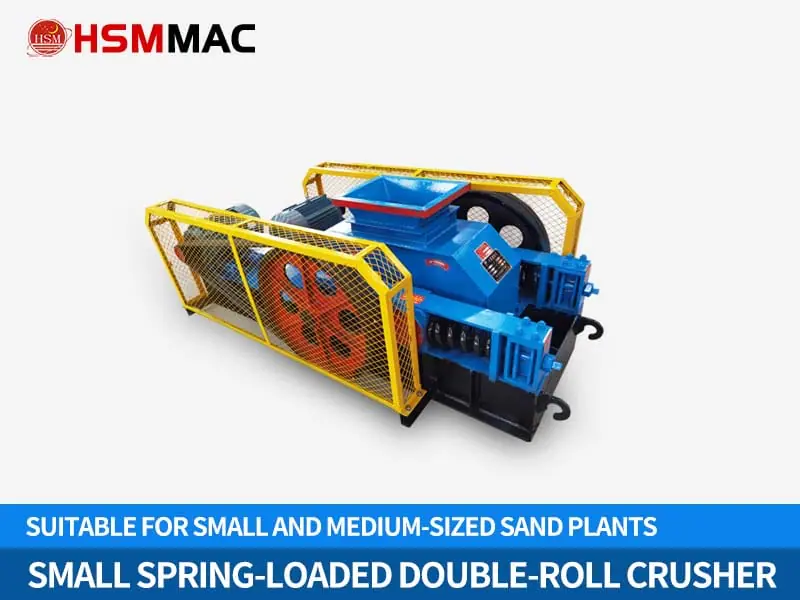
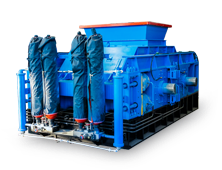
- Mineral Double Roll Crusher: Breaks ore via low-speed compression between two counter-rotating rollers. While its reduction ratio is moderate, it excels at controlling over-crushing, producing minimal slimes, and delivering stable particle gradations.
2. Choose a Cone Crusher If:
- You require high hourly throughput and a large reduction ratio to streamline your primary/secondary crushing circuit.
- Your run-of-mine feed size is relatively large and your downstream process has no strict limits on slime content.
- Your downstream separation method is magnetic separation, which is largely insensitive to fine slimes.
Inherent Weakness: Excessive fine slimes increase reagent consumption in flotation and severely reduce bed permeability in heap leaching operations. Furthermore, replacing integrated concave and mantle wear parts incurs substantial maintenance costs.
3. Choose an HSM Mineral Roll Crusher If:
- You operate a flotation concentrator or heap leach mine where strict slime control is critical for maximizing metal recovery.
- It serves as a tertiary fine crusher downstream of a cone crusher, feeding ball mill circuits with consistent sizing.
- Your goal is “more crushing, less grinding” to lower overall ball mill electrical power consumption.
- You prefer segmented, modular roll shells that allow partial section replacements to minimize spare parts expenses.
- Uniform particle shape and stable gradation curves are mandatory for your plant specification.
Inherent Weakness: Limited reduction ratio; it is unsuited for primary coarse reduction of massive run-of-mine boulders.
4. Recommended Combined Flowsheet
Rather than treating cone crushers and mineral roll crushers as mutually exclusive, modern high-recovery beneficiation plants combine their mechanical strengths:
ROM Ore to Primary Jaw Crusher to Secondary Cone Crusher to Vibrating Screen to HSM Mineral Roll Crusher (Tertiary Fine Crushing) to Closed-Circuit Screening to Ball Mill Grinding Circuit / Heap Leaching Stockpile [Custom Parameters Available].
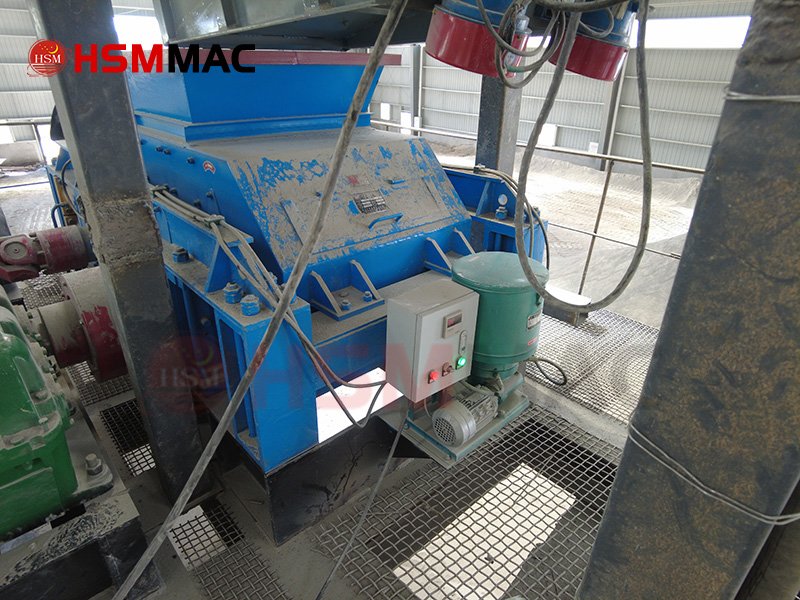
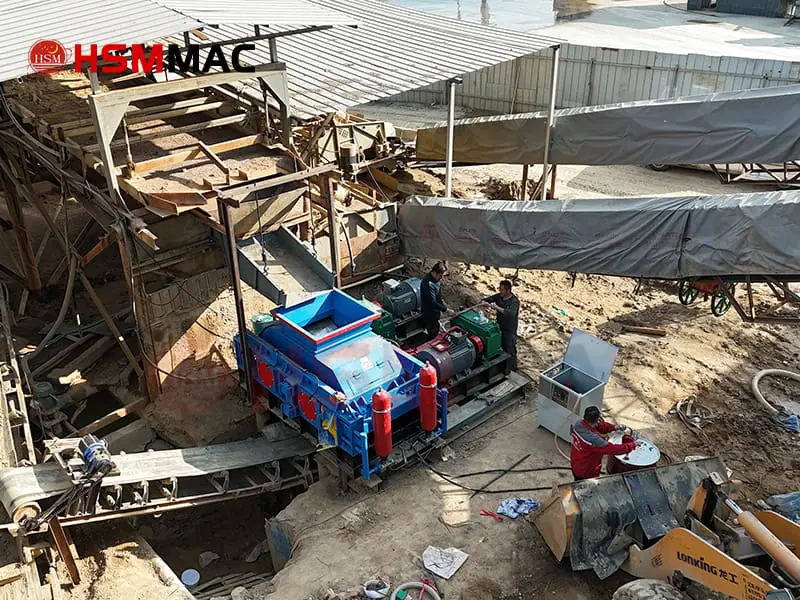
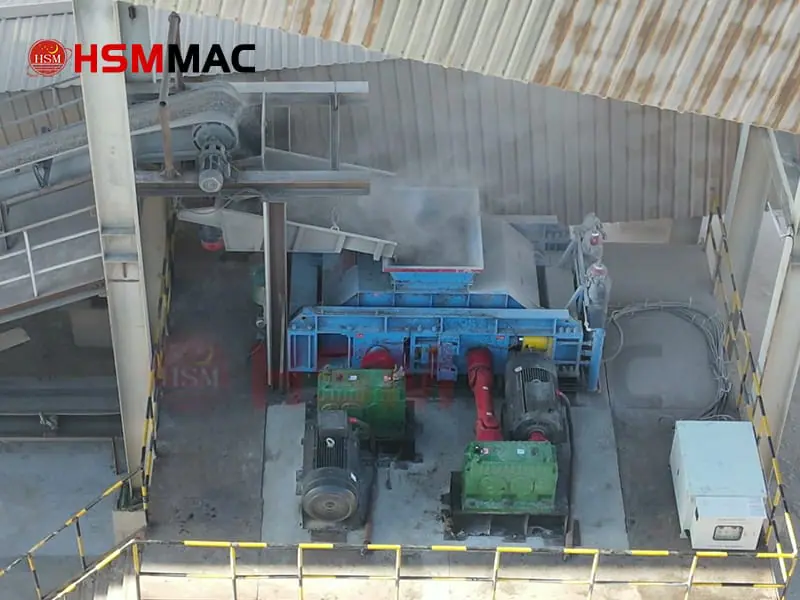
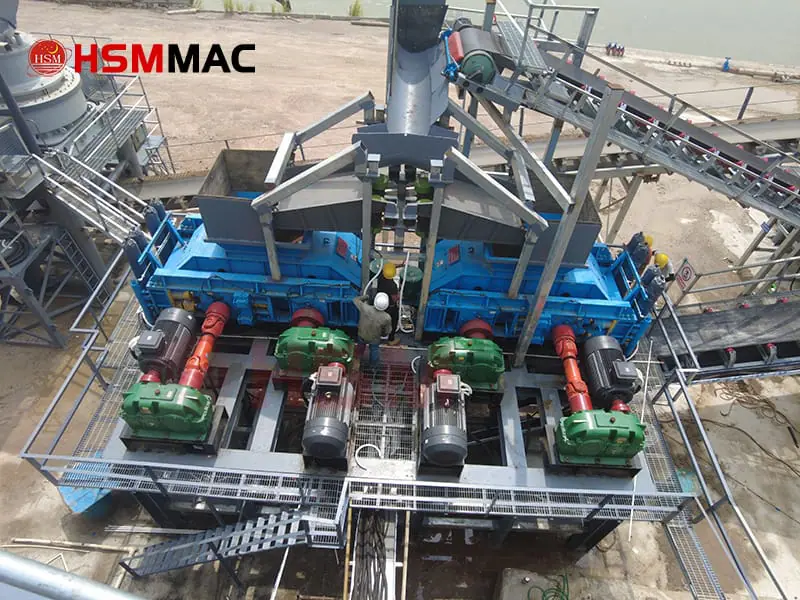
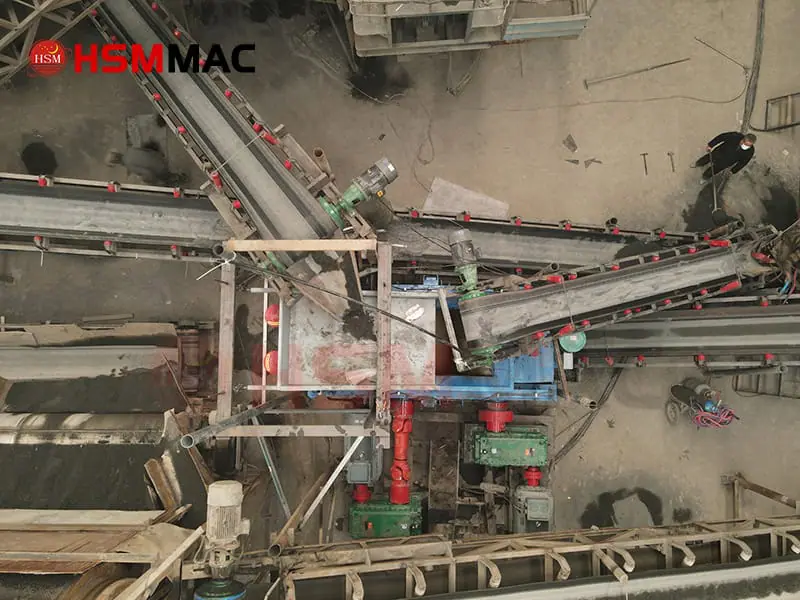
Applications of Double-Roll Crushers in Mineral Processing Plants
5. Quick Selection Summary
- Pick a cone crusher when high capacity and large reduction ratios are your primary engineering criteria.
- Pick an HSM mineral roll crusher for fine crushing when slime control, stable particle gradation, and enhanced metal recovery are your top priorities.