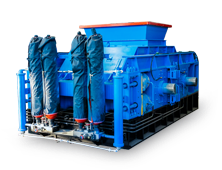
Mineral roll crushers, also known as double roll crushers, play a vital role in mineral processing circuits for medium and fine crushing. They are especially favored by mining operations seeking to prevent over-crushing, stabilize particle gradation, and cut downstream grinding power costs. Huashengming (HSM) Heavy Industry’s mineral roll crushers are engineered for diverse metallic and non-metallic ores, delivering reliable performance across flotation, magnetic separation, heap leaching, and mineral sand production lines.
A mineral roll crusher, also known as a double roll crusher, is widely utilized across mineral processing circuits for tertiary medium and fine crushing stages. It is particularly popular among mining operations that need to eliminate over-crushing, maintain predictable particle gradations, and reduce overall grinding power expenses. HSM mineral roll crushers are engineered to handle a broad spectrum of metallic and non-metallic ores, ensuring dependable performance for flotation circuits, magnetic separation plants, heap leaching pads, and manufactured sand lines [Custom Parameters Available].
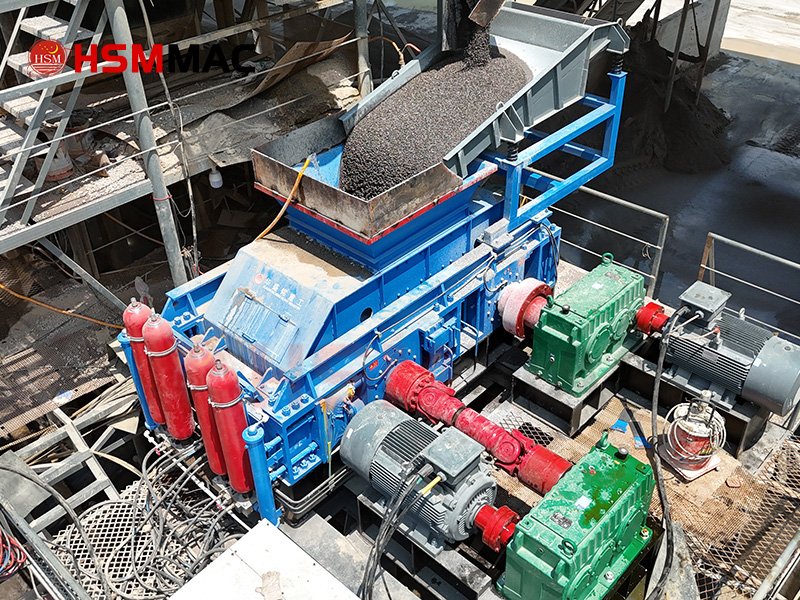
Heavy-Duty HSM Mineral Roll Crusher Operating in a Beneficiation Plant
1. Is a Mineral Roll Crusher Suitable for Ore Processing?
Yes. It typically functions as a high-efficiency tertiary fine crusher downstream of primary jaw crushers or secondary cone crushers.
- Smooth Roll: Designed for fine crushing and sand making, delivering low slime generation and consistent particle sizing.
- Toothed Roll: Engineered for medium crushing with larger allowable feed top sizes, ideal for medium-hard minerals.
- Not for Primary Coarse Duties: It is not designed as a primary coarse crusher for massive run-of-mine ore boulders.
2. Core Advantages for Mineral Crushing
- Low Over-Crushing Protects Recovery: Low-speed compression comminution creates substantially fewer ultra-fine slimes. For copper, gold, lead-zinc, and oxide ores, minimizing slimes directly enhances flotation selectivity and improves heap leach bed permeability.
- Adjustable Roll Gap for Stable Sizing: Hydraulic gap adjustment supports real-time discharge sizing adjustments. Providing a uniform feed top size to ball mills reduces operational fluctuations in downstream grinding and separation indexes.
- Heavy-Duty Wear-Resistant Roll Shells: Outfitted with high-chromium manganese alloy liners and optional hardfacing overlays. Segmented shell structures allow partial section replacements rather than changing full rollers, cutting spare parts expenses and downtime.
- Hydraulic Overload Protection: When tramp iron or uncrushable hard blocks enter the crushing cavity, the movable roller retracts automatically to prevent structural frame and bearing damage.
- Realize “More Crushing, Less Grinding”: Compression creates internal micro-cracks within mineral grains. This reduces ball mill grinding workloads significantly and lowers overall plant electrical consumption.
- Simple Structure & Easy Maintenance: Featuring low rotational speeds, fewer vulnerable components, and accessible inspection points, it delivers higher operational stability on abrasive ores than impact crushers.
3. Mineral Applications and Typical Flowsheet
Main Mineral Applications:
- Precious Metal Ores: Gold ore, silver ore
- Non-Ferrous Ores: Copper ore, lead-zinc ore
- Ferrous Ores: Iron ore, manganese ore
- Hard Rock Minerals: Quartz, granite, basalt
- Medium-Soft Minerals: Limestone, dolomite, gypsum
Typical Mineral Processing Flowsheet:
Run-of-mine ore to Primary Jaw Crusher to Secondary Cone Crusher to Vibrating Screen to HSM Mineral Roll Crusher (Fine Crushing) to Closed-Circuit Screening to Ball Mill / Stockpile [Custom Parameters Available].
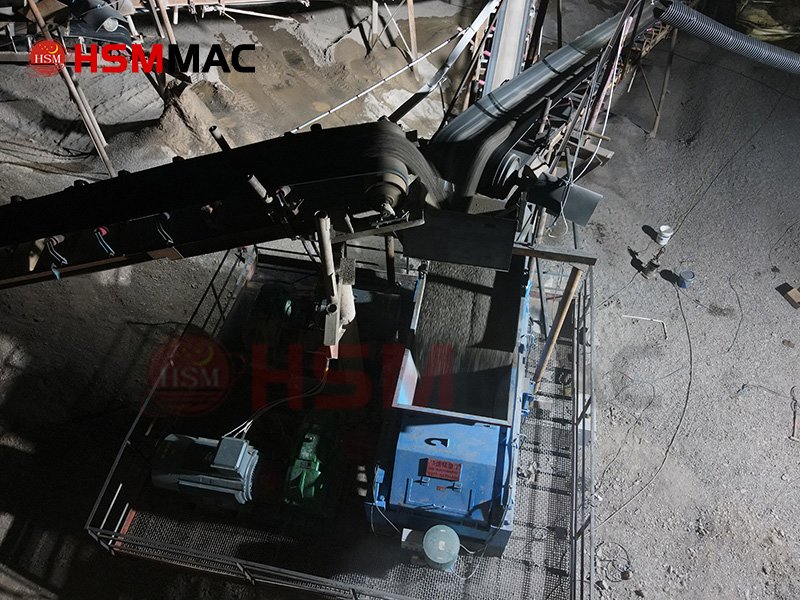
High-Chrome Alloy Segmented Roll Shells and Uniform Crushed Ore
4. Selection Guide & Engineering FAQ
Key Selection Parameters:
- Ore hardness and abrasiveness (quartz-bearing ores require upgraded wear packages)
- Feed top size, target product sizing, and hourly capacity
- Downstream process needs (flotation, magnetic separation, heap leaching, or manufactured sand)
- Roll surface selection (smooth rolls for fine crushing vs. toothed rolls for medium reduction)
Frequently Asked Questions:
- Q: Mineral roll crusher vs. cone crusher for ore fine crushing?
A: Cone crushers offer larger hourly capacities and higher reduction ratios. Mineral roll crushers excel when you need to strictly limit slimes, maintain stable gradation, and reduce maintenance costs. - Q: Can it crush high-hardness minerals?
A: Yes. Select an HSM heavy hydraulic mineral roll crusher equipped with reinforced wear-resistant roll shells for hard ores such as quartz and chalcopyrite [Custom Parameters Available]. - Q: How long do roll shells last in mineral processing conditions?
A: Generally 8 to 18 months, depending directly on ore abrasiveness, free silica/quartz content, and proper feed distribution management.
Ready to Enhance Your Mineral Processing Circuit?
Contact Huashengming Heavy Industry today for customized model selection, test run arrangements, factory-direct inventory, and complete mineral crushing solutions tailored to your project [Custom Parameters Available]!
Reliable global shipping support for domestic mining operations as well as international installations across Southeast Asia, Africa, and worldwide!